Why Your Rebounder Squeaks (and How to Actually Fix It)
Quick Answer: Most rebounder squeaks come from the frame joints or the fabric mat rubbing against the spring hooks, not the springs themselves — a few drops of silicone lubricant on the hooks and joints usually fixes it in under 10 minutes.
Your rebounder was silent for months, and now every bounce comes with a squeak that makes you self-conscious about working out during a video call. Before you assume it’s broken, know that this is almost always a maintenance fix, not a replacement situation.

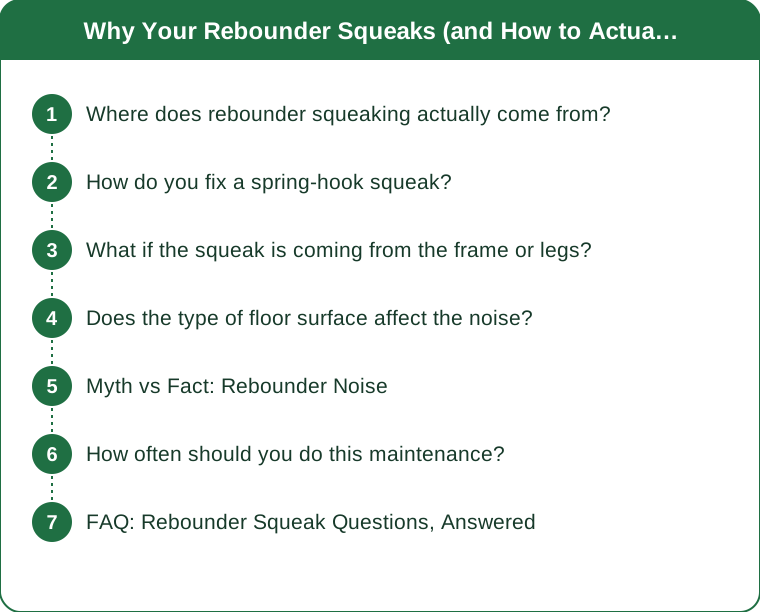
Where does rebounder squeaking actually come from?
The two most common sources are the metal spring hooks rubbing against the frame or mat fabric, and the folding-leg joints on portable models, which loosen slightly with regular use. True bungee-cord rebounders squeak far less than spring models, since there’s no metal-on-metal or metal-on-fabric contact point.
It’s rarely the springs stretching or wearing out — spring-based squeaks are almost always friction noise, not structural fatigue, unless the rebounder is many years old.
How do you fix a spring-hook squeak?
Apply a small amount of silicone spray lubricant (not WD-40, which can degrade rubber and fabric over time) directly to each spring hook where it connects to both the frame and the mat. Bounce gently a few times to work the lubricant in, then wipe away any excess that dripped onto the mat surface.
This fix typically lasts several months before needing to be reapplied, depending on how often you use the rebounder.
What if the squeak is coming from the frame or legs?
Check the folding joints and leg connectors for looseness by gently trying to wiggle each leg — a squeak here usually means a bolt has loosened slightly. Tightening with the appropriate hex key or wrench (most rebounders ship with one) resolves it without needing any lubricant.
If tightening doesn’t help, a small amount of the same silicone lubricant on the joint pivot point usually finishes the job.

Does the type of floor surface affect the noise?
Yes — using your rebounder directly on hardwood or tile without a mat underneath can create an additional rattling or squeaking as the rubber feet shift slightly with each bounce. Placing a thin rubber gym mat underneath the entire rebounder dampens this secondary noise source.
This is a separate issue from the spring or joint squeak, so if you’ve already lubricated the springs and it’s still noisy, check the floor contact first.
Myth vs Fact: Rebounder Noise
Myth: a squeaky rebounder is unsafe to keep using. Fact: squeaking is a noise issue caused by friction, not a sign of structural failure — unless you also notice visible wear, a torn mat, or a spring that’s actually come loose from its hook, it’s safe to keep bouncing while you fix the sound.
Myth: you need to replace all the springs to fix persistent squeaking. Fact: full spring replacement is rarely necessary; lubrication and joint tightening resolve the vast majority of cases, and springs typically last for years of regular use.
How often should you do this maintenance?
For daily users, a quick lubrication check every 2-3 months keeps squeaking from building back up, and it takes less time than a single workout session. Inspect the mat fabric for fraying near the spring attachment points at the same time, since that’s the next thing to wear on a well-used rebounder.
FAQ: Rebounder Squeak Questions, Answered
Is it normal for a brand-new rebounder to squeak?
A little squeak in the first few sessions is common as springs and joints settle into regular use, and it often resolves on its own within the first two weeks without any fix needed.
Can you use cooking oil or other household lubricants instead of silicone spray?
It’s best to avoid this — household oils can attract dust and grime or degrade rubber components over time, while silicone spray is specifically formulated to be safe on both metal and fabric.
Does a squeaky rebounder mean the springs are about to break?
Not usually — a squeak is a friction sound, while an actual failing spring typically shows visible rust, stretching, or a hook that’s bent out of shape, which are different warning signs entirely.
TL;DR:
- Squeaks almost always come from spring hooks or leg joints, not failing springs
- Silicone spray lubricant on hooks and joints fixes most cases in under 10 minutes
- Avoid WD-40, which can degrade rubber and fabric over repeated use
- Check for a squeaky floor-contact issue separately if lubrication doesn’t fully solve it
A squeaky rebounder is an annoyance, not a red flag — a few minutes of lubrication usually gets your bounce back to silent.
Keep Reading
This article is for general informational and styling purposes only. Fit, sizing, and product availability may vary.