7 Things That Change When You Move Your Rebounder Onto Carpet
Quick Answer: Carpet absorbs part of the energy the rebounder is designed to return, so the bounce feels shorter and flatter and you work harder for the same result. It also lets the legs sink unevenly, which is the actual safety concern - an uneven base means a tilting frame during asymmetric movement. Carpet does reduce noise transmission usefully and it protects the floor, so it is not simply worse. Knowing which of the seven changes applies to your setup tells you whether to move it or to put a board underneath.
The rebounder did not lose its bounce. The carpet is taking a share of it.
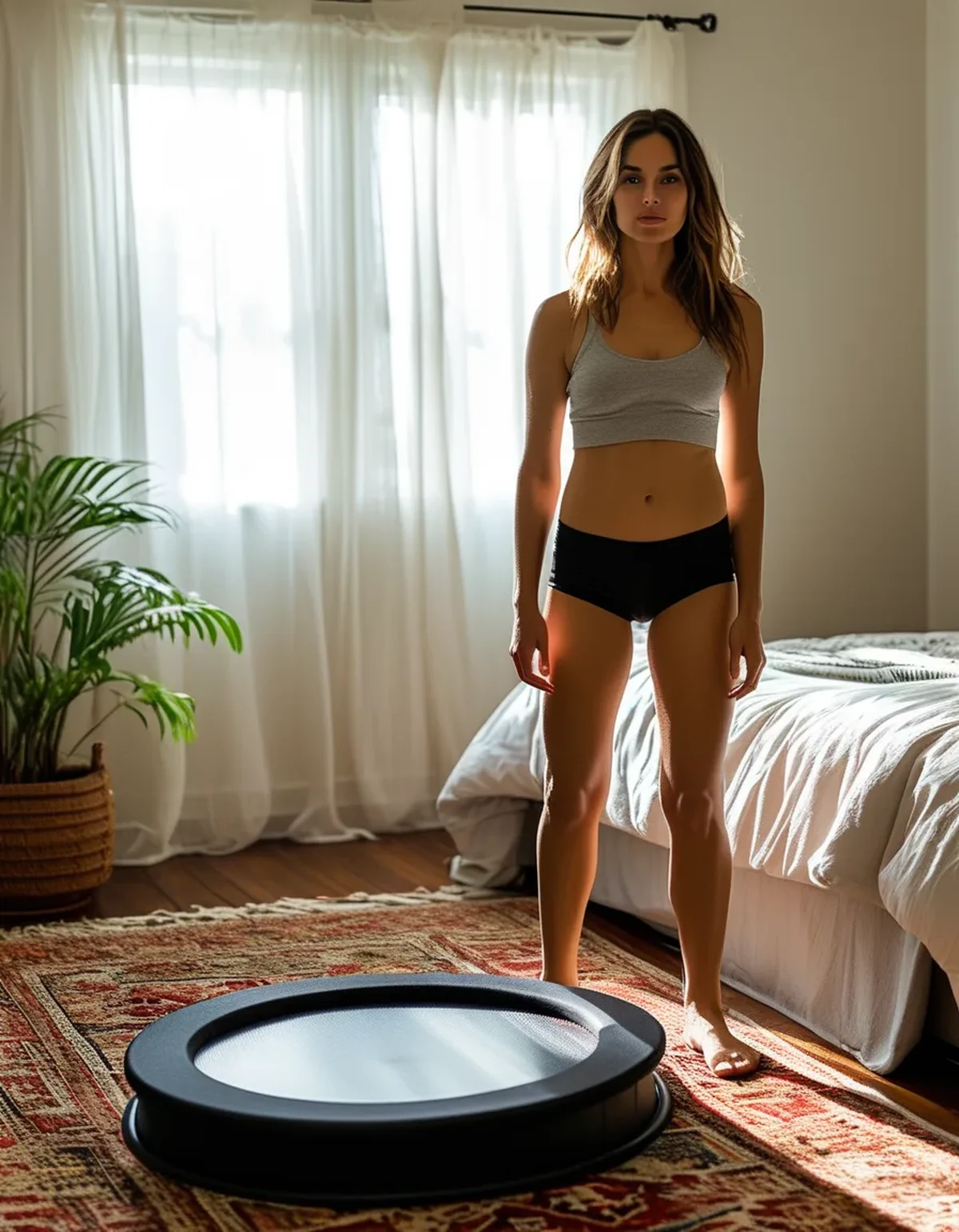
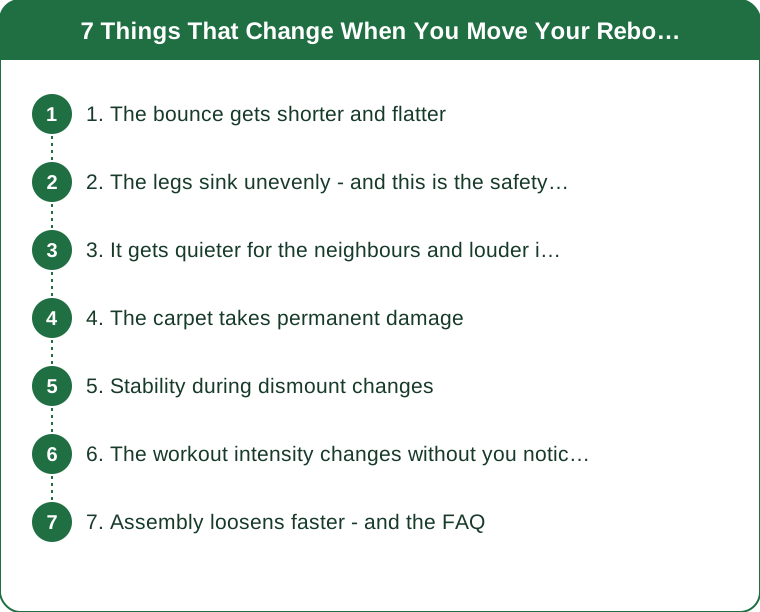
1. The bounce gets shorter and flatter
Carpet and underlay compress under the legs, absorbing energy that would otherwise be returned through the mat.
Thick underlay is the bigger factor - a low-pile carpet over a dense subfloor changes very little, while a plush carpet over thick foam changes a lot.
The effect is more noticeable in bungee-corded rebounders than spring models, because the softer bounce has less energy to spare.
You compensate without noticing by pushing harder, which changes the effort of a workout you thought you had calibrated.
The fix is a rigid board under the legs - a piece of plywood or an equipment mat over a board redistributes load and restores most of the response.
And check whether you actually mind. A softer bounce is easier on the joints and perfectly reasonable if you are not chasing a specific training effect.
2. The legs sink unevenly - and this is the safety issue
Carpet compresses under load and does not compress equally, particularly near edges, seams, or over floor joists.
An uneven base means the frame tilts slightly, and the tilt is amplified during any movement where weight shifts to one side.
Twists, single-leg work, and side-to-side movement are where this matters, and those are exactly the exercises where a stable base is most needed.
Check by pressing down on each leg individually with the rebounder in place - any difference in travel between legs is a problem.
A rigid board across all legs solves it completely, which is why this is the single most worthwhile modification.
And re-check after moving it, since a rebounder left in one spot compresses the carpet permanently and moving it means starting the process over on fresh pile.
3. It gets quieter for the neighbours and louder in the room
Carpet significantly reduces impact transmission into the structure, which is a genuine benefit in an apartment.
Airborne noise in your own room can increase slightly because the frame works harder against an uneven base and squeaks more readily.
Bungee models benefit most from the carpet’s damping, since spring models generate more airborne noise that the carpet does not address.
The transmission benefit only applies to what enters the floor. A rebounder on a board on carpet loses part of that advantage in exchange for stability.
A dedicated impact mat under the board recovers most of it, which is the usual apartment compromise.
And any squeak that develops after moving to carpet is usually the frame flexing on an uneven base, so it is a symptom worth investigating rather than oiling.

4. The carpet takes permanent damage
Concentrated load under each leg crushes the pile permanently, and the marks do not recover after a few weeks in place.
Repeated impact grinds fibres against each other, which wears the pile far faster than static furniture does.
Wool carpet recovers better than synthetic but still shows marks under a rebounder’s loading.
Wide feet or caps spread the load and reduce this significantly, and most manufacturers sell them cheaply.
A mat under the whole footprint protects the carpet and makes the whole unit easier to move.
And if you are renting, this is worth thinking about in advance - the marks are usually permanent and clearly identifiable.
5. Stability during dismount changes
Stepping off onto compressed carpet is different from stepping onto a hard floor, and the transition catches people out.
The compressed ring around the rebounder is uneven ground, which is a real trip risk immediately after a session when balance is already fatigued.
Step down deliberately rather than hopping off, particularly at the end of a session.
Keep the surrounding area clear - carpet hides objects that would be visible on a hard floor.
A stability bar is worth more on carpet than on hard flooring for anyone with balance concerns.
And be careful in socks. Carpet plus socks is a genuinely slippery combination on dismount, and bare feet or grip socks are the safer choice.
6. The workout intensity changes without you noticing
The same session becomes harder because you compensate for the absorbed bounce, so effort rises without any change in the programme.
Heart rate at a given routine tends to run higher, which is either a bonus or a problem depending on what you were training.
Progress tracking breaks across the move, because your reference sessions were built on a different surface.
Re-baseline after moving the rebounder, treating it as a change to the equipment rather than to your fitness.
Note the surface in your training log alongside anything else you track, because it is a real variable.
And expect the first few sessions to feel wrong, which is calibration rather than deconditioning.
7. Assembly loosens faster - and the FAQ
A slightly uneven base flexes the frame with every bounce, which works fixings loose faster than a flat surface does.
Check bolts and leg fittings monthly on carpet rather than the usual quarterly, and more often in the first month after a move.
Squeaks are the early warning that something has loosened, and they usually precede any visible movement.
FAQ: Rebounders on Carpet, Answered
Is it safe to use a rebounder on carpet? Generally yes on low-pile carpet, provided all legs sit evenly. On thick carpet or plush underlay, put a rigid board underneath.
Will it damage my carpet? Yes, usually permanently. Wide feet and a mat under the whole footprint reduce it considerably.
Why does my bounce feel dead? The carpet is absorbing energy the mat would otherwise return. A board restores most of it.
Is carpet better for neighbours? Yes, it reduces impact transmission into the structure meaningfully - which is the main reason to accept the trade-offs.
Should I use a mat as well? A mat over a board gives stability and protects the carpet, and it is the best combination for most apartments. This is general information, not medical advice - follow your rebounder manufacturer’s guidance on surfaces.
TL;DR:
- Carpet absorbs energy the mat should return, so the bounce goes flat and you unknowingly work harder for the same session.
- The real safety issue is uneven leg sink - it tilts the frame exactly during the twisting and single-leg work that needs a stable base.
- A rigid board under all legs fixes both, and a mat over the board protects the carpet and keeps some noise benefit.
- Carpet genuinely reduces impact transmission to neighbours, which is the main reason to put up with the trade-offs.
- Fixings loosen faster on carpet, so check bolts monthly and treat a new squeak as a loosening warning.
Press each leg individually before your next session. Any difference in travel between them is the problem to fix first.
Keep Reading
This article is for general informational and styling purposes only. Fit, sizing, and product availability may vary.