Why a Mini Trampoline Workout Feels Easier Than It Actually Is
Bouncing on a mini trampoline feels closer to play than exercise, which is exactly why so many people underestimate how much actual cardiovascular work is happening underneath that easy, springy feeling.

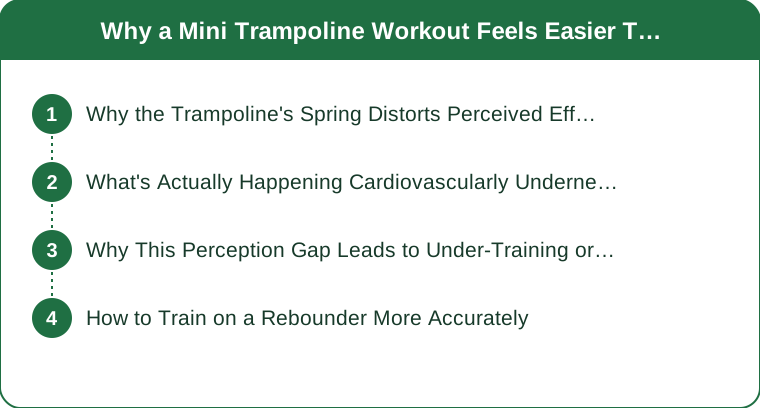
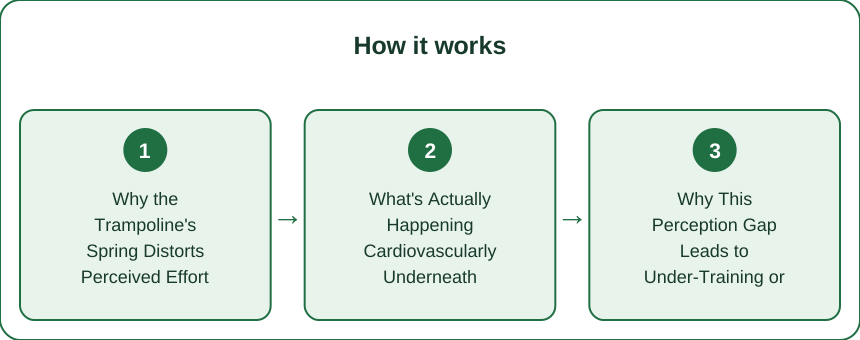
Why the Trampoline’s Spring Distorts Perceived Effort
The mechanism: the trampoline’s mat absorbing and returning energy with each bounce, which reduces the muscular effort needed compared to an equivalent movement on solid ground, creating a real gap between how hard it feels and the actual workload.
What’s Actually Happening Cardiovascularly Underneath
The hidden demand: heart rate during a sustained rebounding session climbing to levels comparable with jogging or moderate-intensity cardio, even though the joint impact and perceived muscular effort feel considerably lighter than either.

Why This Perception Gap Leads to Under-Training or Over-Training
The practical risk: the easy-feeling nature of rebounding leading some people to underestimate the workout and stop before getting a real cardio benefit, while others push bounce intensity too far too fast because the joint-friendly feel masks how much cardiovascular strain is actually building.
How to Train on a Rebounder More Accurately
The better gauge: tracking heart rate or using a simple talk-test during a rebounding session rather than relying on how hard the movement itself feels, since perceived effort specifically underrepresents the actual intensity on a trampoline, and the frame (a mini trampoline workout feels easier than its real cardiovascular demand because the spring absorbs muscular effort that solid ground wouldn’t — tracking heart rate rather than how hard it feels gives a more accurate read on actual intensity.)
Bouncing on a mini trampoline feels closer to play than exercise, largely because the trampoline’s mat absorbs and returns energy with each bounce, which reduces the muscular effort needed compared to an equivalent movement on solid ground and creates a real gap between how hard it feels and the actual workload. Heart rate during a sustained rebounding session climbs to levels comparable with jogging or moderate-intensity cardio, even though the joint impact and perceived muscular effort feel considerably lighter than either, and that gap leads some people to underestimate the workout and stop before getting a real cardio benefit, while others push bounce intensity too far too fast because the joint-friendly feel masks how much cardiovascular strain is actually building. Tracking heart rate or using a simple talk-test during a rebounding session, rather than relying on how hard the movement itself feels, gives a far more accurate read on actual intensity than perceived effort does on a trampoline specifically.
Keep Reading
This article is for general informational and styling purposes only. Fit, sizing, and product availability may vary.