7 Ways Rebounding Actually Burns Fat (and How to Structure a Weight-Loss Plan)
Quick Answer: Rebounding supports weight loss through the same core mechanism as any cardio - calorie burn from sustained movement - but its low-impact bounce also lets most people sustain longer, more frequent sessions than higher-impact cardio, which is often the real driver of results. A structured plan of 20-30 minutes, 4-5 times a week, mixing steady bouncing with short intervals, is a reasonable starting point.
Rebounding gets dismissed as ‘not real cardio’ by people who’ve never tried a genuinely challenging session. Here are the 7 real mechanisms behind rebounding weight loss and how to structure a plan around them.

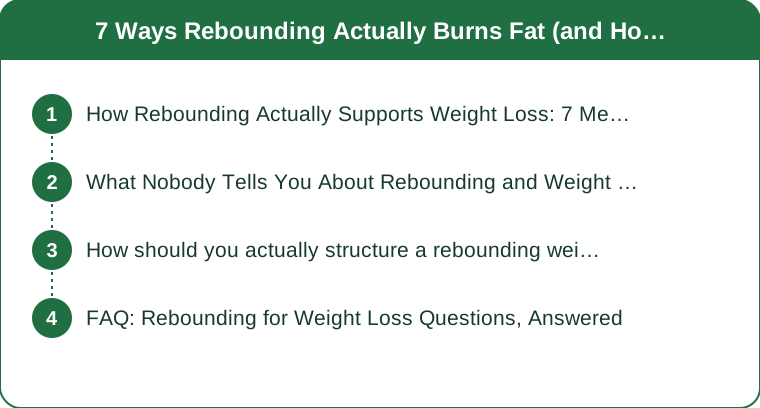
How Rebounding Actually Supports Weight Loss: 7 Mechanisms
1. Sustained calorie burn from continuous movement
A moderate rebounding session burns a comparable number of calories per minute to brisk walking or light jogging for most people, and because it’s low-impact, sessions can run longer without the joint fatigue that cuts other cardio short.
2. Low impact means more consistent weekly volume
The biggest weight-loss lever in any cardio plan is total consistent volume over weeks and months. Because rebounding is gentler on joints than running, many people can do it more days per week without the soreness or injury risk that interrupts other cardio routines.
3. Interval bouncing raises the ceiling further
Alternating 30-60 seconds of hard bouncing with 30-60 seconds of easy bouncing (a basic interval structure) pushes heart rate higher than steady-state bouncing alone, adding an afterburn effect that continues burning calories for a period after the session ends.
4. Full-body muscle engagement adds a strength component
Stabilizing on an unstable surface engages core, glutes, and legs more than a flat-ground cardio equivalent, which supports the muscle maintenance that keeps metabolism higher during a calorie deficit.
5. Lower perceived exertion keeps people showing up
Many people rate rebounding as feeling easier than it actually is in terms of calorie burn, which sounds like a downside but functions as an advantage - it makes daily or near-daily sessions feel sustainable rather than dreaded.
6. It’s accessible for beginners and higher body weights
Because the surface absorbs impact, rebounding is often more approachable for people just starting a fitness routine or carrying more body weight, removing a barrier that stops many people from starting cardio at all.
7. Short session length lowers the activation barrier
A meaningful rebounding session can happen in 15-20 minutes in a small space at home, removing the commute-to-gym barrier that derails consistency for a lot of people trying to lose weight.
What Nobody Tells You About Rebounding and Weight Loss
Here’s the part that gets skipped: rebounding alone, without attention to nutrition, will not produce significant weight loss for most people - this is true of any single form of exercise. The realistic role of rebounding in a weight-loss plan is as the consistent, sustainable cardio piece that you’ll actually stick with, paired with a modest calorie deficit through eating habits.
The other underrated factor: intensity matters more than most rebounding marketing suggests. A gentle, low-effort bounce for 20 minutes burns meaningfully less than an interval-structured session at the same length - if weight loss is the specific goal, the interval structure below matters.
Sleep also plays a bigger role in rebounding results than most weight-loss content mentions. Poor sleep raises hunger hormones and blunts recovery from the intervals described above, which can quietly undercut an otherwise solid rebounding routine - prioritizing 7-plus hours most nights supports the plan as much as any single workout detail does.

How should you actually structure a rebounding weight-loss plan?
A reasonable starting structure: 4-5 sessions a week, 20-30 minutes each, with 2-3 of those sessions built around intervals (30-60 seconds hard, 30-60 seconds easy, repeated) and the remainder as steady, moderate bouncing. Building from shorter sessions (10-15 minutes) in week one and adding time gradually reduces early burnout and soreness.
Pairing this with basic strength training 2x a week, even short bodyweight sessions, supports the muscle-preservation piece that keeps results from just being ‘smaller but softer.’
Tracking progress with something other than just body weight - waist measurement, how your favorite jeans fit, or a simple RPE (rate of perceived exertion) log for each session - tends to keep motivation steadier than watching the scale alone, especially in the first few weeks before visible changes show up.
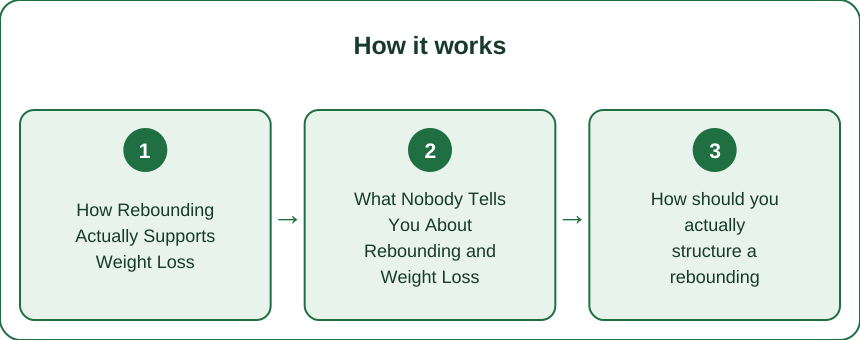
FAQ: Rebounding for Weight Loss Questions, Answered
How long until I see weight-loss results from rebounding?
Most people combining consistent rebounding with attention to diet notice changes in energy and how clothes fit within 3-4 weeks, with more visible changes by 8-12 weeks - individual results vary based on starting point and consistency.
Is rebounding enough on its own, without changing my diet?
Exercise alone, including rebounding, typically produces modest results without at least some attention to eating habits - the two work together, not separately.
Can beginners do interval bouncing right away?
Start with steady, moderate bouncing for the first 1-2 weeks to build comfort with balance and coordination, then introduce short intervals once the basic movement feels stable.
TL;DR:
- Rebounding burns calories through sustained movement, boosted further by interval structure
- Its low impact means more consistent weekly volume than higher-impact cardio for many people
- 4-5 sessions weekly, 20-30 minutes, mixing intervals and steady bouncing is a solid starting plan
- Pair it with basic nutrition attention and light strength training for real results
Consistency on a low-impact option usually beats sporadic high-impact effort for weight loss over time.
Keep Reading
This article is for general informational and styling purposes only. Fit, sizing, and product availability may vary.