7 Rebounder Mistakes Almost Every New Owner Makes in the First Month
Quick Answer: The most common rebounder mistakes new owners make are bouncing too high too soon, ignoring posture and core engagement, skipping a warm-up, using worn-out or poor-quality springs, overestimating calorie burn, working out on an unstable surface, and quitting before the first few awkward weeks pass.
A rebounder is genuinely low-impact and beginner-friendly, but a few small setup and habit mistakes are usually why the experience doesn’t match the hype for so many first-time owners.

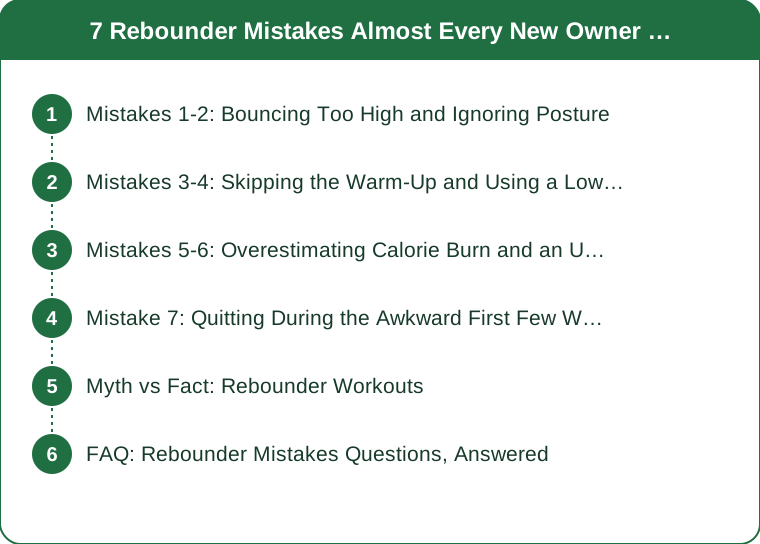
Mistakes 1-2: Bouncing Too High and Ignoring Posture
Mistake 1: Bouncing too high, too soon
New users often try to bounce as high as possible right away, assuming bigger bounces mean a better workout — but high, uncontrolled bounces increase both injury risk and the chance of losing balance, especially before core stability catches up. Starting with small, controlled bounces that barely leave the mat builds the foundation for safely progressing to bigger movements later.
Mistake 2: Ignoring posture and core engagement
Slouched shoulders and a disengaged core turn a rebounder session into a passive bounce rather than an actual workout — the core needs to stay lightly engaged throughout to stabilize the body and actually work the muscles rebounding is known for. A quick posture check every few minutes (shoulders back, core lightly braced) keeps a session effective rather than just bouncy.
Mistakes 3-4: Skipping the Warm-Up and Using a Low-Quality Rebounder
Mistake 3: Skipping the warm-up entirely
Jumping straight into a rebounder session cold increases strain on ankles, knees, and hips, which absorb repeated impact even in a low-impact workout. A few minutes of gentle marching or light bouncing before increasing intensity gives joints time to warm up properly.
Mistake 4: Buying or using a low-quality rebounder
Cheap rebounders with weak or uneven springs transfer more shock to the joints and wear out noticeably faster, undermining the low-impact benefit that’s the entire appeal of the equipment. A rebounder with quality, evenly tensioned springs (or a bungee-based system) is worth the investment for anyone planning to use it regularly.
Mistakes 5-6: Overestimating Calorie Burn and an Unstable Setup
Mistake 5: Overestimating calorie burn
Rebounder workouts do burn real calories, but marketing claims sometimes overstate the numbers compared to what a moderate-intensity session actually delivers for most people. Treating it as a genuinely effective low-impact cardio option, rather than a shortcut that outperforms all other cardio, sets more realistic and sustainable expectations.
Mistake 6: Working out on an unstable or cluttered surface
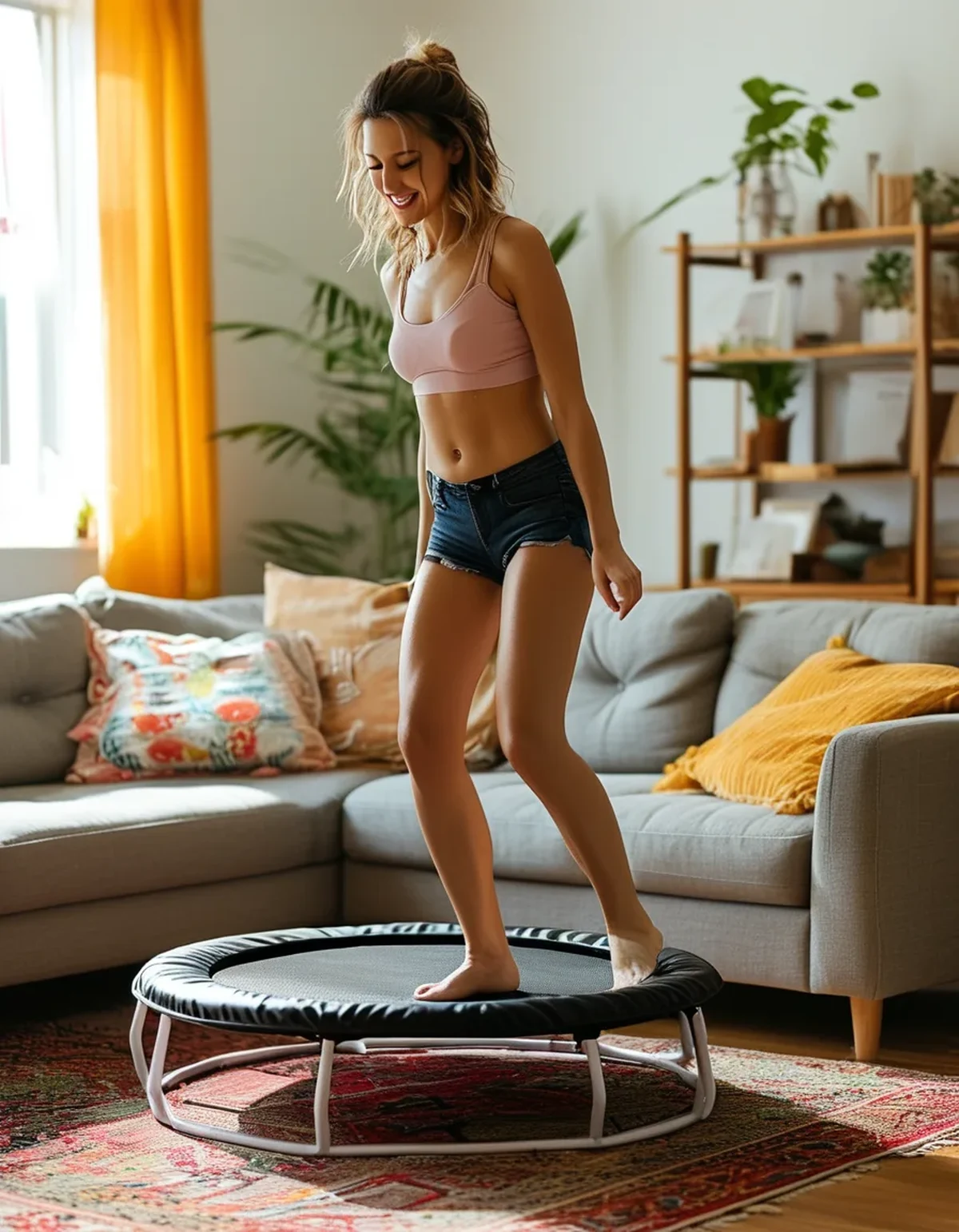
Placing a rebounder on carpet, near furniture, or in a tight space increases fall risk and limits safe range of motion. A firm, flat surface with clear space on all sides is a simple setup fix that removes a surprising amount of unnecessary risk.
Mistake 7: Quitting During the Awkward First Few Weeks
Balance and coordination on a rebounder take a few sessions to develop, and a lot of new owners quit right when things are starting to click because the first sessions feel clumsier than expected. Sticking with short, consistent sessions through that initial adjustment period is usually what separates people who end up loving their rebounder from those who abandon it in a closet.
Myth vs Fact: Rebounder Workouts
Myth: a rebounder workout is only effective if you’re bouncing as high as possible. Fact: controlled, moderate bounces with good posture build more real fitness benefit than high, uncontrolled ones, and carry far less injury risk.
Myth: any mini trampoline works about the same as any other. Fact: spring quality directly affects joint impact and durability, making it one of the few areas worth spending more on.
FAQ: Rebounder Mistakes Questions, Answered
How long does the awkward adjustment period usually last?
Most people feel noticeably more coordinated and confident within 2 to 3 weeks of regular short sessions.
Do I need special shoes for a rebounder?
Most rebounder workouts are done barefoot or in grip socks, since shoes can reduce the feedback and stability barefoot bouncing provides.
How often should beginners use a rebounder?
Starting with 3 short sessions a week and building up gradually is a reasonable pace that avoids overuse while building the skill and habit.
TL;DR:
- Start with small, controlled bounces rather than going for height right away
- Keep the core lightly engaged and posture upright throughout
- Warm up briefly before increasing intensity
- Invest in a quality rebounder with even, well-tensioned springs
- Set up on a firm, clear, flat surface
- Push through the awkward first few weeks — that’s when it starts clicking
Most rebounder disappointment traces back to one of these seven fixable habits, not the equipment itself.
Keep Reading
This article is for general informational and styling purposes only. Fit, sizing, and product availability may vary.