The Beginner Rebounder Workout: Bouncing Your Way to Fitness (Gently)
Quick Answer: A beginner rebounder workout starts with the “health bounce” — feet staying on the mat, heels barely lifting — for 2–3 minutes, then adds jogging in place, knee lifts and jumping jacks in 30-second intervals. Aim for 10–15 minutes total for your first two weeks and build toward 20–30 minutes. Low impact, surprisingly hard, and genuinely fun.
The first time you get on a mini trampoline as an adult, two things happen. You feel slightly ridiculous, and about four minutes later you’re out of breath.
Rebounding hides how effective it is behind how much fun it is. That’s the whole pitch, and it’s why people who hate cardio stick with this one.
Why Is Rebounding Good for Beginners?
It’s genuinely low-impact. The mat absorbs most of the landing force, so your knees, hips and ankles take a fraction of what running delivers. This is why it works for people carrying extra weight, coming back from injury, or well past the age where jogging feels appealing.
The cardio is real anyway. Low impact doesn’t mean low effort. Continuous bouncing gets most beginners breathing hard within five minutes.
It trains balance at the same time. An unstable surface means your stabilizing muscles work constantly. That’s a meaningful side benefit, particularly for older adults.
It’s fun, which is the actual point. The best cardio is the one you’ll do on a Tuesday in February. Bouncing to music beats the treadmill for a lot of people, and adherence is what produces results.
What Is the Health Bounce, and Why Start There?
The health bounce is the foundation and the thing most beginners skip.
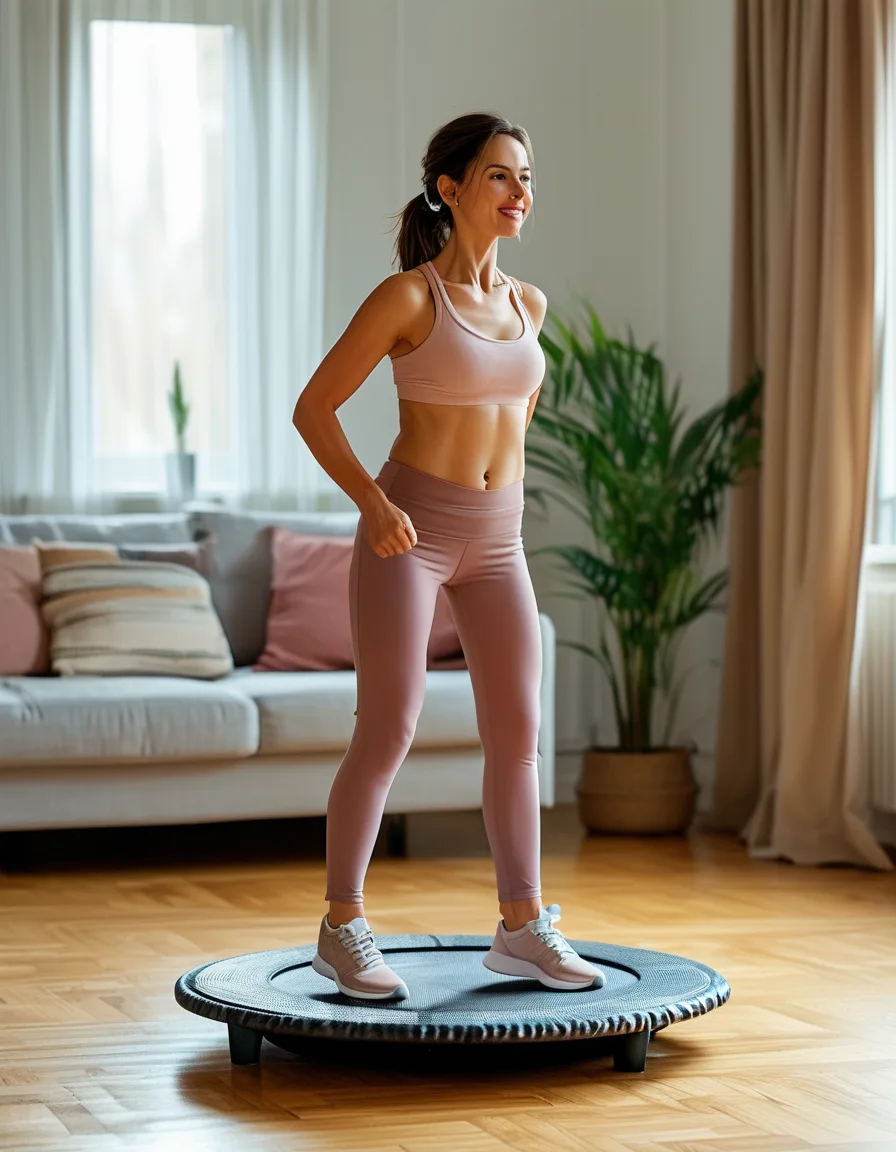
Feet stay in contact with the mat. You’re not jumping — you’re pushing down into the mat and letting it push back, so your heels lift maybe an inch and your toes never leave. Knees soft, posture tall, arms relaxed.
It looks like almost nothing. It’s teaching your body the rhythm of the mat, waking up your stabilizers, and letting you find your balance before anything more ambitious. Do 2–3 minutes of it at the start of every session, and use it as your recovery between harder intervals.
If you have any balance concerns, this is also where a stability bar earns its money. There’s no prize for wobbling.
What Does a Beginner Rebounder Workout Look Like?
Your first two weeks — 12 minutes:
- Health bounce, 3 minutes. Warm-up.
- Basic bounce, 2 minutes. Feet leave the mat slightly, landing softly through the whole foot.
- Jog in place, 1 minute. Alternate knees, low and easy.
- Health bounce, 1 minute. Recover.
- Jog in place, 1 minute.
- Health bounce, 1 minute.
- Cool down, 3 minutes. Gentle bounce slowing down, then step off and stretch calves and hip flexors.
Weeks 3–6 — building to 20 minutes. Add these in 30-second intervals with 30 seconds of health bounce between:
- Knee lifts — drive one knee up, alternating.
- Jumping jacks — feet out and in, arms overhead.
- Twists — hips rotating one way, shoulders the other.
- Heel digs — alternating heels forward, light and quick.
Beyond that, extend the work intervals to 45 seconds, shorten recovery to 20, and add rounds. A 25-minute session with real intervals is a serious workout.
Make a playlist. A 20-minute playlist at 128–140 BPM does your interval timing for you and makes the whole thing feel like less of a chore.
What Should You Know About Safety and Equipment?
Buy a stable rebounder. This is the one place not to bargain hunt. Bungee-corded models are quieter and gentler on joints than spring models; look for a weight rating well above your own and a frame that doesn’t flex. A wobbly cheap unit is both less effective and genuinely unsafe.
Add a stability bar if balance is a question. For older adults or anyone with dizziness, it turns a risky activity into a safe one. No downside.
Clear the space. Arm span in every direction, nothing overhead, and check ceiling height — you’d be surprised.
Mind your pelvic floor. Repeated bouncing is a real load on the pelvic floor, particularly postpartum or in perimenopause. Start with health bounce only, progress slowly, and if you experience leaking, stop and talk to a pelvic health physiotherapist. This is common, treatable, and not something to push through.
Bounce barefoot or in supportive shoes — not socks. Socks on a mat is how ankles roll.
5 Mistakes Everyone Makes
- Skipping the health bounce. Straight to jumping jacks on day one is how people find the mat’s edge.
- Bouncing too high. Height isn’t the goal. Controlled, rhythmic, and consistent beats airborne.
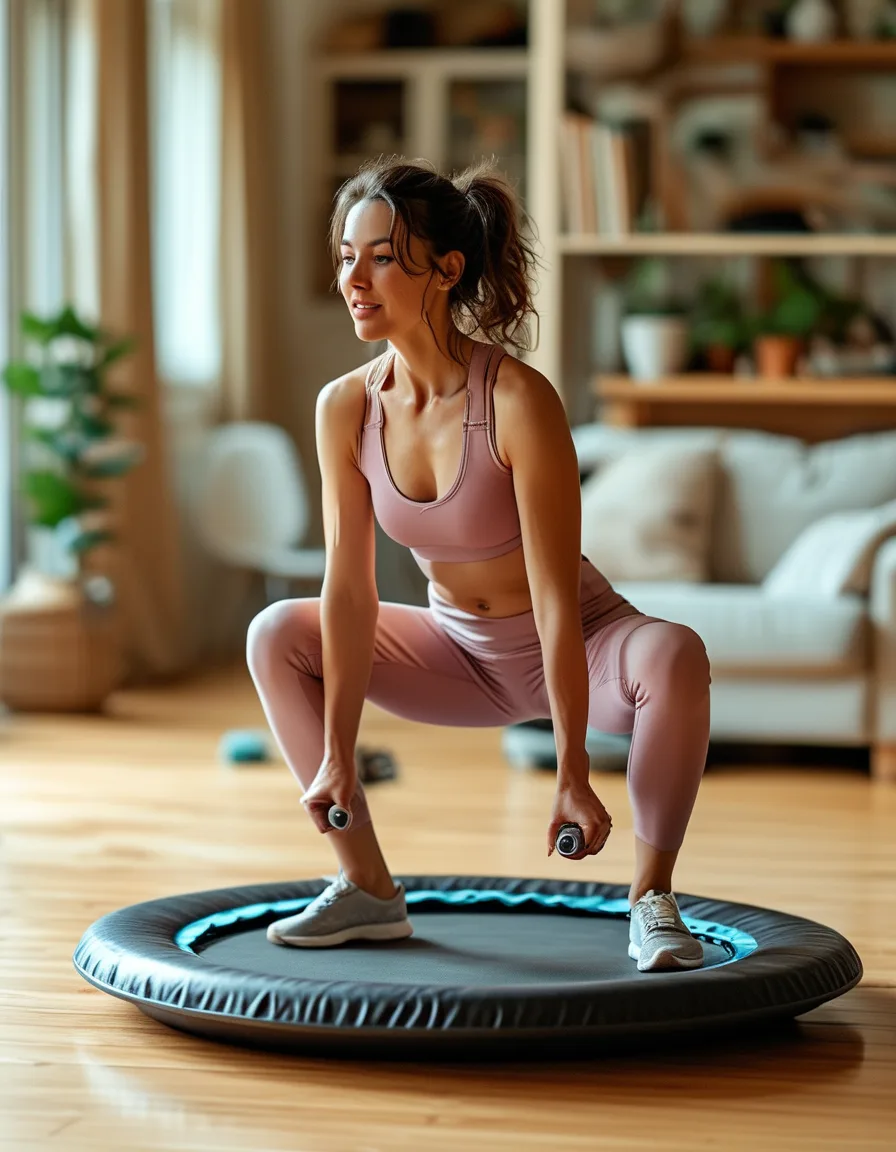
- Landing stiff-legged. Soft knees absorb; locked knees send force straight up the chain.
- Looking down at your feet. Eyes forward keeps your balance. This is the third mistake and it’s the one that catches even confident beginners.
- Doing 40 minutes on day one. Your stabilizers and calves will file a complaint the next day. Start at 12 minutes.
How Often Should You Rebound?
3–4 sessions a week is a solid target for beginners. Alternate harder interval days with gentle health-bounce days — a 10-minute easy session is a perfectly good active recovery day and keeps the habit alive.
Expect noticeable improvements in balance within 2–3 weeks and cardiovascular fitness within 6–8. Calves will be sore after the first few sessions; that settles.
FAQ
How long should a beginner rebound for?
Start at 10–15 minutes and build about 5 minutes per week. Twenty to thirty minutes is a full session for most people once you’re conditioned.
Is rebounding better than walking?
It’s harder per minute and easier on the joints, but walking gets you outside and has its own benefits. Many people do both. The one you’ll actually do consistently is the better one.
Can seniors use a rebounder?
Yes, and it’s one of the better options for balance training in older adults — with a stability bar and starting with health bounce only. Anyone with osteoporosis, vertigo, or a recent joint replacement should check with their doctor first.
Why do my calves hurt after rebounding?
Because rebounding loads them constantly and they’re not used to it. It settles within a couple of weeks. Stretch calves after each session and build volume gradually.
TL;DR:
- Start with the health bounce — feet stay on the mat, heels barely lift — for 2–3 minutes.
- First two weeks: about 12 minutes total, mixing basic bounce, jogging and recovery.
- Build to 20–30 minutes with 30-second intervals of knee lifts, jacks, twists and heel digs.
- Buy a stable rebounder; add a stability bar if balance is any concern.
- Soft knees, eyes forward, don’t chase height.
- Pelvic floor awareness matters — progress slowly, and see a pelvic health physio if there’s leaking.
- 3–4 sessions a week; balance improves in 2–3 weeks, fitness in 6–8.
Keep Reading
This article is for general informational and styling purposes only. Fit, sizing, and product availability may vary.