Barefoot, Grip Socks, or Shoes: What to Wear on a Rebounder
Quick Answer: All three options are legitimate on a rebounder — they just train different things. Barefoot gives maximum mat feel and quietly strengthens the small stabilizing muscles of the foot, but needs a gradual on-ramp. Grip socks keep most of that ground feel while adding traction and warmth, making them the best everyday default for steady bouncing. Supportive sneakers make sense for high-intensity classes, jump-heavy intervals, or anyone managing ankle instability, at the cost of dulled feedback. Regular smooth socks are the one genuinely wrong answer — they turn the mat into a skating rink.
Match the footwear to the session and rotate, and your feet get trained instead of just transported.
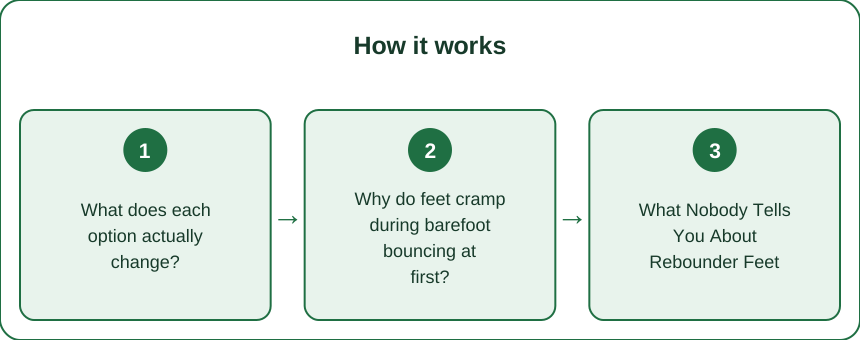
What does each option actually change?
The interface between you and a moving surface — which on a rebounder is everything.
Barefoot is the high-information setting. The sole of the foot is dense with mechanoreceptors that read pressure and shear, and a flexing mat is a rich signal. Bouncing barefoot, your toes spread and grip, your arches load and recoil, and dozens of small intrinsic foot muscles fire to manage each landing — muscles that spend their lives asleep inside cushioned shoes. Over weeks, that is genuine foot and ankle training smuggled into your cardio. The cost: those muscles fatigue fast when untrained, and bare skin on a textured mat can get friction-warm during longer sessions.
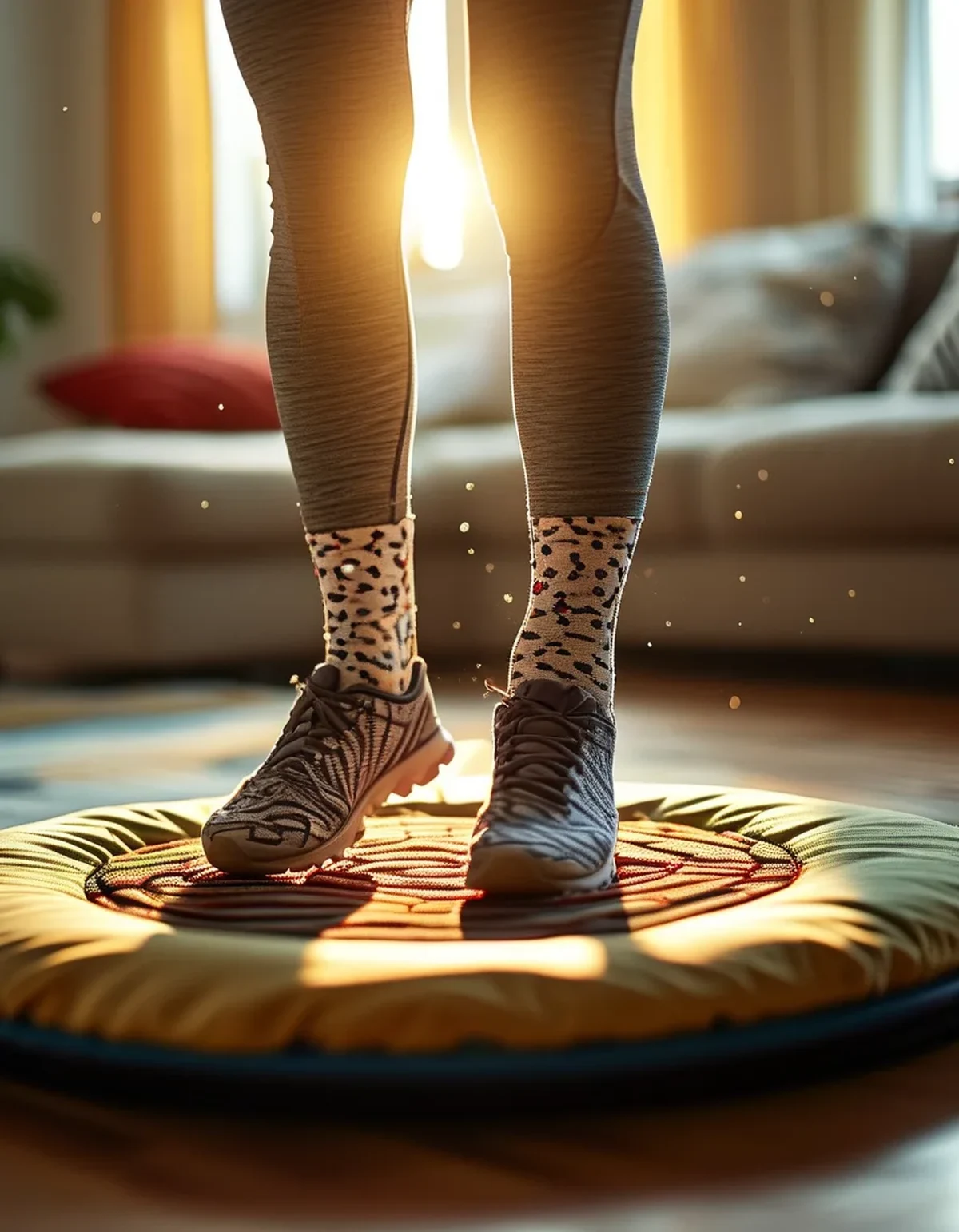
Grip socks keep perhaps most of the feel and solve the two barefoot complaints. The rubberized sole pattern locks onto the mat — traction bare skin only matches when it is slightly tacky — while fabric handles friction and cold-floor mornings. This is why studio rebounding classes so often require them: predictable traction across every foot in the room, plus hygiene.
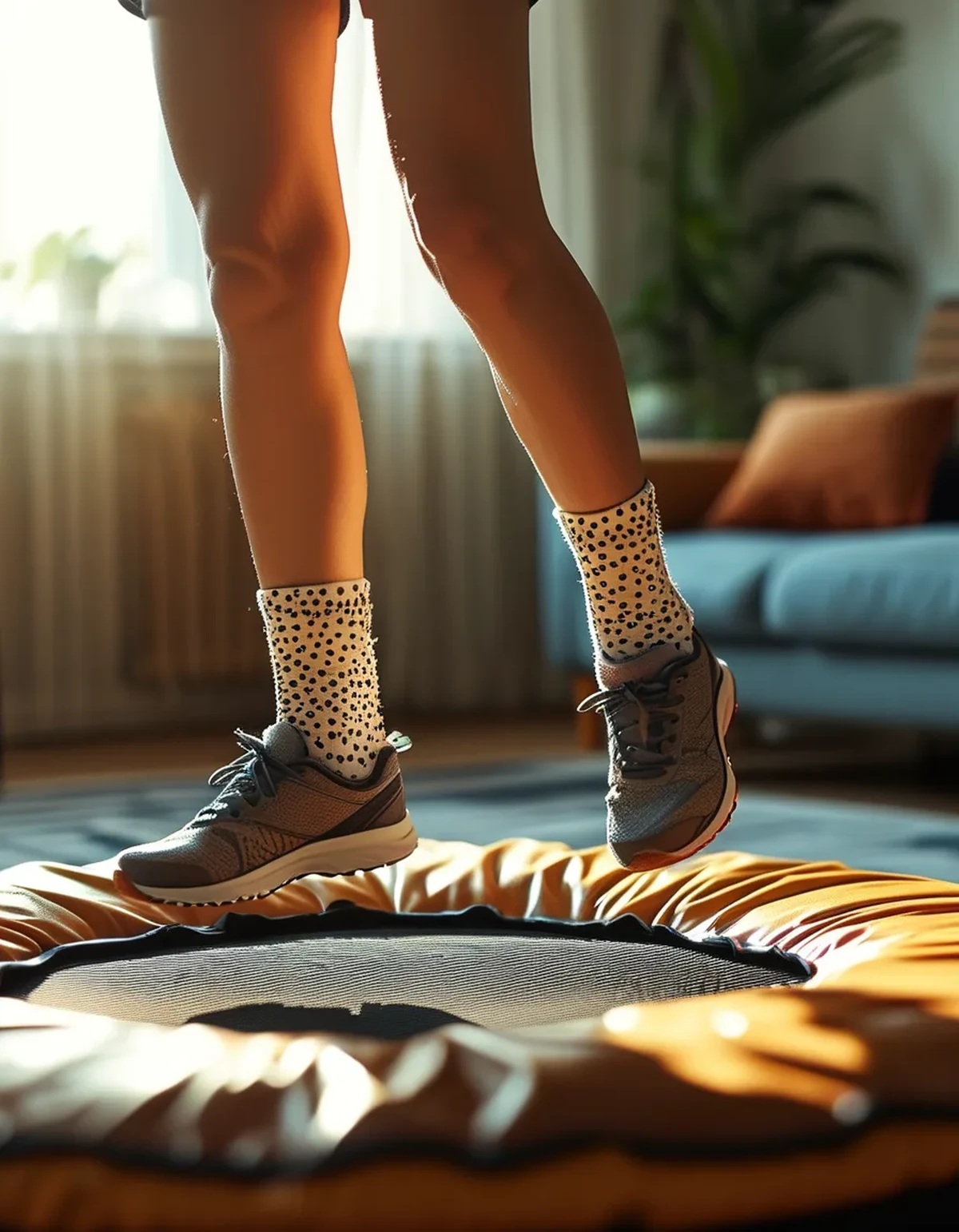
Sneakers change the contract entirely. A cushioned midsole spreads landing pressure and a structured upper stabilizes the ankle — welcome insurance for aggressive intervals or wobbly ankles — but the same layers mute the mat’s feedback and put your foot’s stabilizing work on the shoe’s payroll. Balance work in shoes is easier and therefore trains less.
Ordinary socks combine the feedback of a shoe with the traction of ice. On a surface that actively rebounds you, that is the one configuration with nothing to recommend it.
Why do feet cramp during barefoot bouncing at first?
Because you woke up a muscle group that has been unemployed for years, and gave it a cardio session on day one.
Cushioned, structured footwear does the foot’s stabilizing work for it — that is the product. Decades of that outsourcing leaves the intrinsic foot muscles detrained, and a rebounder is a demanding first assignment: the surface drops away and returns with every bounce, so those small muscles are managing balance on a moving floor, continuously, for however long the playlist runs. The arch-cramp or toe-curl twenty minutes in is not injury; it is the exact sensation of unfit muscles hitting fatigue — the foot’s version of the shaking you felt in your first plank.
The on-ramp is the same as any other weak muscle group. Start with five to ten barefoot minutes at the end of a session and add five each week. Do the rest in grip socks or sneakers. When cramping starts, that is the honest end of the barefoot portion, not a wall to bounce through — switch footwear and finish comfortably.
Accelerate the adaptation off the mat, where it is cheaper: calf raises with a slow lower, toe-spreading practice, and a few minutes of standing on one foot while the coffee brews. The feet strengthen quickly once asked — most people go from ten cramping minutes to a full barefoot session in four to six weeks.
Two populations should skip the barefoot project without a green light from their clinician: anyone with diabetic neuropathy or reduced foot sensation, where skin and joint feedback cannot be trusted, and anyone actively managing plantar fasciitis, where the loading dose needs professional tuning.
What Nobody Tells You About Rebounder Feet
The mat has a wear map, and your feet drew it. Everyone bounces in the same home spot, and the texture there polishes smooth over months — smoother mat, less traction, more slip precisely where you always stand. Rotate your stance position a quarter turn each session, and check the mat when a formerly stable bounce starts feeling skatey. Sometimes the footwear did not change; the floor did.
Toe-clawing is the tell of an unstable setup. If your toes are gripping the mat like a perch, your base is asking for help — bounce too high, stance too narrow, or fatigue past useful. Quiet, long toes are the checkmark of a bounce your body actually controls; clawed toes send tension up the calves and into the knees.
Shoes hide your best feedback: the sound. Barefoot or in grip socks, a heavy or off-center landing is audible and correctable in real time. In cushioned sneakers, the same error is silent, and silent errors get repeated a thousand times.
The health bounce belongs to bare feet. The gentle heels-down pulse where your feet never leave the mat is exactly where barefoot shines: zero impact, maximal proprioception, no traction demand. Even confirmed sneaker-bouncers can take this segment unshod from day one.
Grip wears out before fabric does. Grip socks lose their rubber tread gradually; when the dots have gone shiny, they are regular socks with a history. Retire them to drawer duty before they retire you mid-bounce.
How do you choose per session?
By matching the interface to the job, then dressing the rest of the outfit for a bouncing workout — which has opinions of its own.
Daily steady bouncing and health-bounce sessions: grip socks as the default, barefoot as the graduation. Low landing forces, high balance content — the sessions where ground feel pays best.
High-intensity interval or class-style sessions: sneakers or your best grip socks. Once choreography, speed, and single-leg moves enter, traction and ankle support buy more than feedback does. A supportive low-profile trainer with a flat, flexible sole suits the mat better than a chunky maximal running shoe, whose soft high stack wobbles on a soft surface.
Balance-focused and cooldown work: barefoot, deliberately. Slow single-leg holds and weight shifts on the mat are elite foot training with the interface set to maximum.
Cold months: grip socks win by forfeit — bare feet on a cold garage mat end sessions early, and warm feet bounce better.
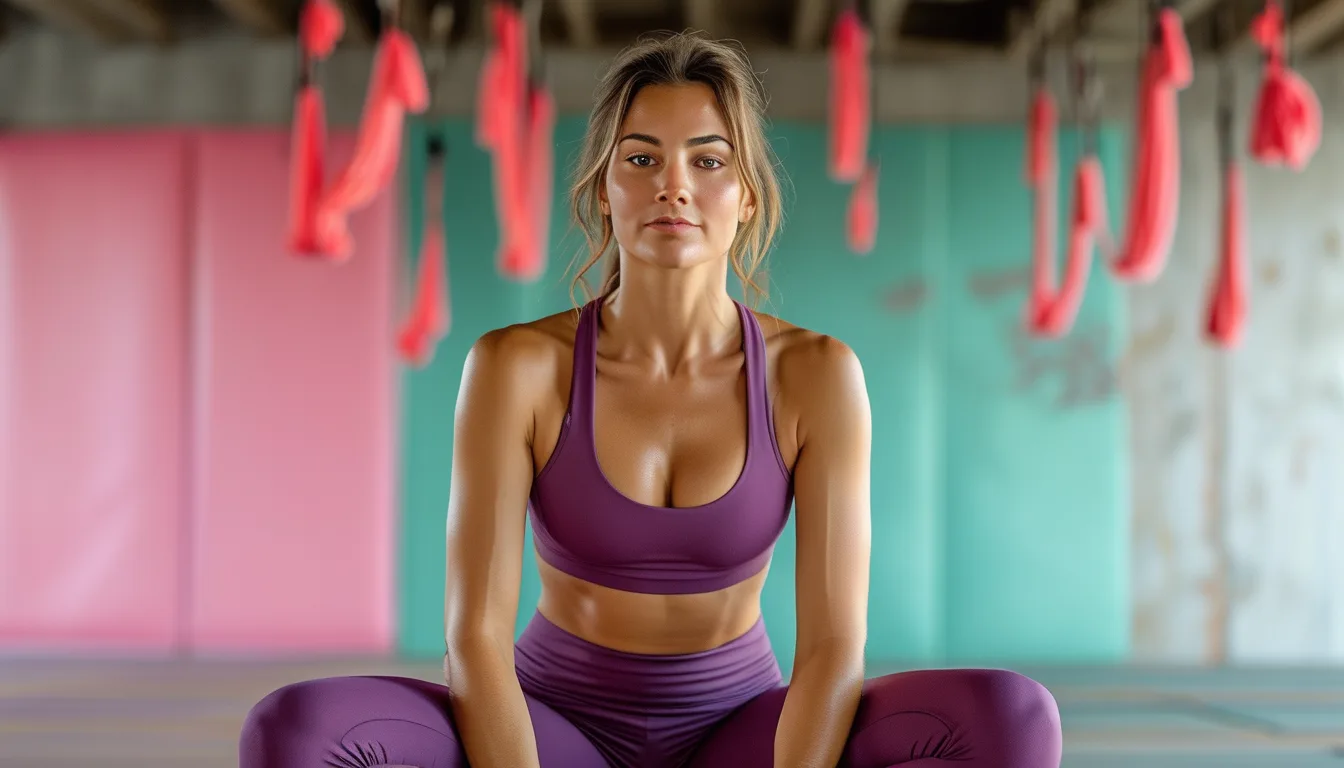
As for the rest of the kit: rebounding is a bounce-dominant workout, so a genuinely supportive high-impact sports bra is not optional equipment, and fitted high-waisted leggings beat shorts and loose joggers, which ride, gap, and flap with every cycle of the bounce. Nothing about the outfit should have its own independent motion.
Rotate interfaces across the week and your feet collect the benefits of each: the strength of barefoot, the confidence of grip, the insurance of shoes — with the mat, the socks, and your arches all lasting longer for the variety.
FAQ: Rebounder Footwear Questions, Answered
Can I just wear my regular cotton socks?
On a rebounder, no — smooth socks on a woven mat is the highest-slip combination available, and the surface is already moving. If sock comfort is the goal, grip socks are the same feeling with the danger removed.
Do I need special rebounder shoes?
No dedicated category is required: a flat, flexible, low-stack trainer works well. What to avoid is tall cushioned running shoes — their soft stack plus a soft mat compounds instability — and anything with a worn smooth outsole.
Why do my feet go numb during longer sessions?
Usually a static-stance issue: constant light pressure in one position, sometimes plus laces tied street-tight for a foot that swells slightly with exercise. Vary foot position every few minutes, wiggle the toes during breaks, and loosen the lacing a notch. Persistent or recurring numbness beyond that is worth a professional look.
Is rebounding workable with plantar fasciitis?
Often, gently — the mat’s low impact is why it gets recommended — but the footwear dose is individual: many need supportive shoes first and barefoot much later, if at all. That sequencing is exactly what a clinician should tune; the general answer is start shod, start short, and progress by symptoms.
TL;DR:
- Barefoot trains the foot’s stabilizers and reads the mat best but needs a five-minutes-a-week on-ramp; grip socks keep the feel and add traction, making them the everyday default.
- Sneakers earn their place in high-intensity sessions and for unstable ankles — flat and flexible, not tall and cushioned. Regular socks are the one wrong answer.
- Watch the tells: toe-clawing means an unstable setup, a polished mat spot means rotate your stance, shiny grip dots mean retire the socks.
- Dress for bounce: high-impact sports bra, fitted leggings, nothing with independent motion.
Next session, spend the last five minutes barefoot doing the health bounce. That small weekly dose is the cheapest foot-strengthening program you will ever install.
See It in Motion
Seen here: High Waist Embossed Yoga Leggings with Side Pockets — shop it on bubblelime.com
Keep Reading
This article is for general informational and styling purposes only. Fit, sizing, and product availability may vary.