7 Things That Happen to Your Knees in the First Month of Rebounding
Quick Answer: Rebounding feels low-impact because the mat absorbs some landing force, but the knees still perform repeated micro-adjustments for balance and stability on an unstable, bouncing surface, which is a genuinely different demand than the knees are used to from flat-ground activity — this new stabilization demand, more than raw impact force, is what commonly causes new soreness or minor strain in the first month, especially with poor form or overly ambitious session length early on.
The first month of rebounding challenges the knees through instability and stabilization demand, not primarily through hard impact — which is exactly why form and pacing matter more early on than most beginners expect.
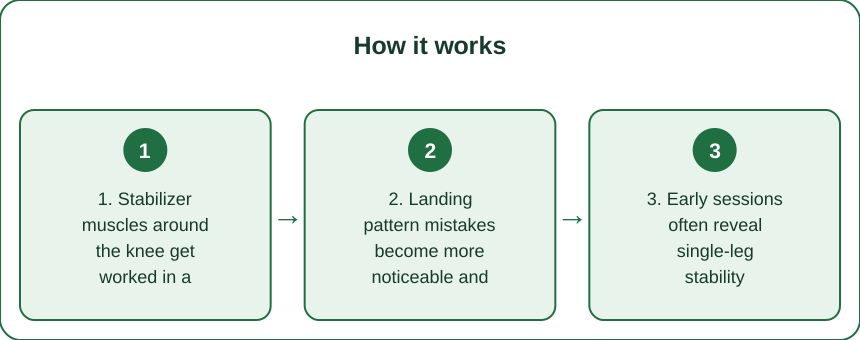
1. Stabilizer muscles around the knee get worked in a genuinely new way.
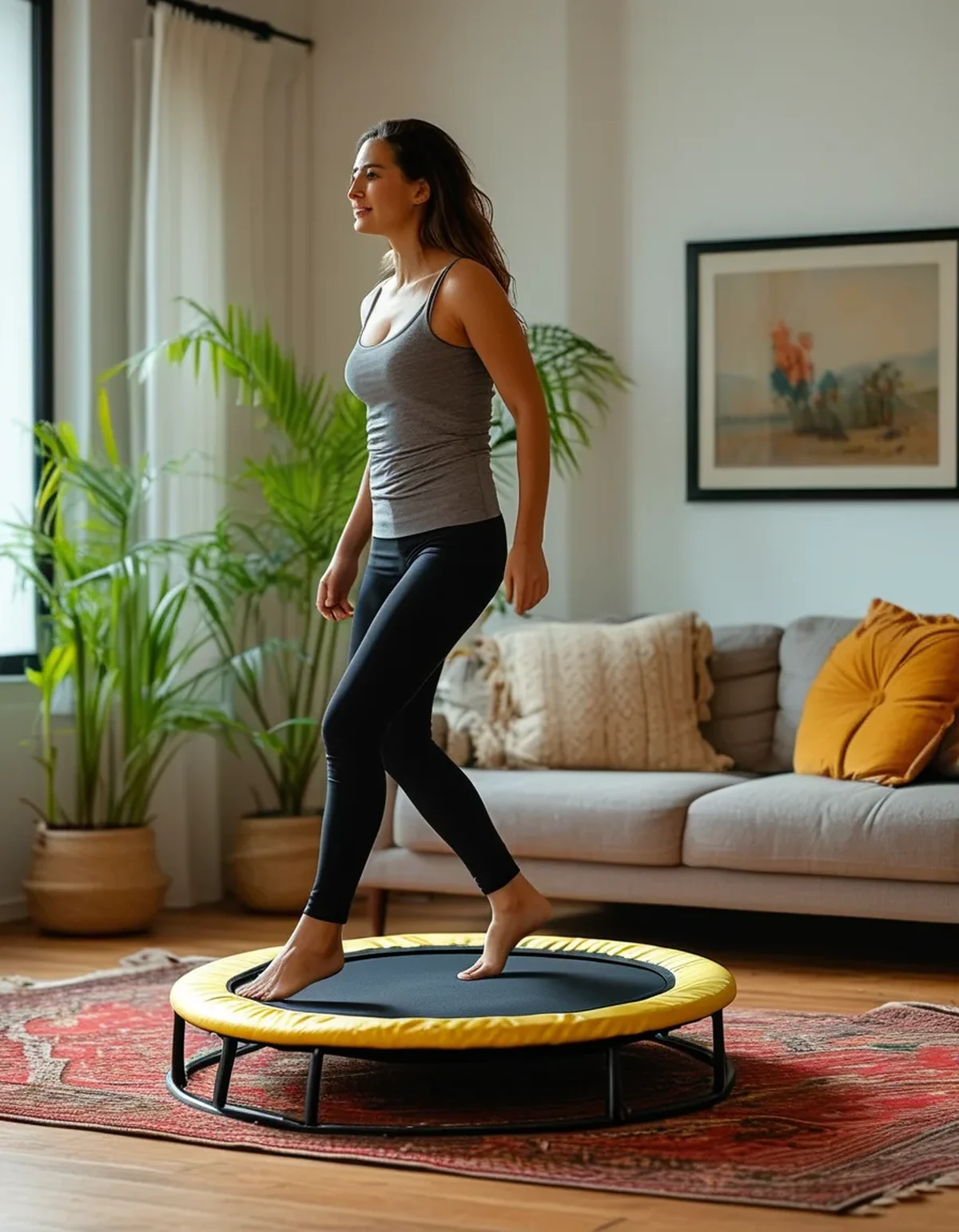
The bouncing, unstable surface requires constant small stabilizing adjustments from the muscles surrounding the knee joint, a demand flat-ground exercise rarely places on these same muscles to this degree. This is often the source of a new, somewhat unfamiliar soreness in the first couple of weeks — not from impact, but from stabilizer muscles working harder than they’re used to.
2. Landing pattern mistakes become more noticeable and more consequential.
On a stable, flat surface, a slightly imperfect landing pattern is often absorbed without much consequence, but on a rebounder’s unstable mat, the same imperfect pattern gets amplified by the mat’s rebound, potentially increasing knee strain if landing mechanics (knees tracking over toes, avoiding inward knee collapse) aren’t consciously maintained.
3. Early sessions often reveal single-leg stability weaknesses.
Many rebounder movements shift weight between legs or involve brief single-leg balance moments, and this frequently reveals asymmetries or weaknesses in single-leg knee stability that a person may not have noticed during more symmetrical, both-feet-planted exercise, making the first month a useful diagnostic period as much as a training one.
4. Overuse strain from excessive early session length is a common first-month mistake.
Because rebounding feels gentle, many beginners start with sessions longer than their knee stabilizers are actually conditioned for, leading to a cumulative overuse strain that develops gradually rather than from any single bad landing. Starting with shorter sessions (10-15 minutes) and building up gradually avoids this common first-month pattern.
5. Footwear choice meaningfully changes knee loading on the mat.
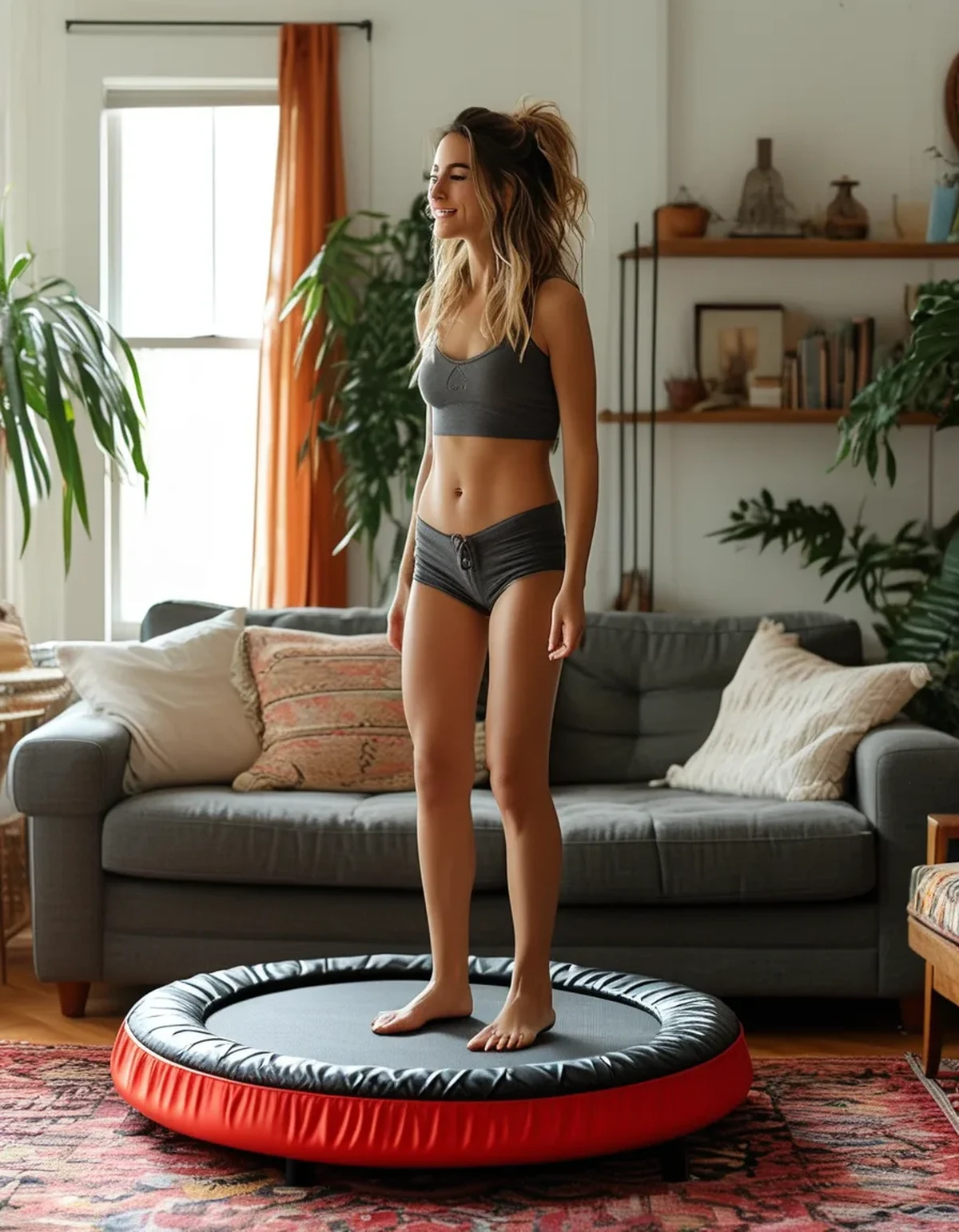
Barefoot or minimal, flexible-sole footwear generally allows better proprioceptive feedback and natural ankle-knee coordination on a rebounder than a thick, stiff-soled shoe, which can interfere with the fine stabilizing adjustments the joint needs to make. Many rebounder-specific guides recommend barefoot or grip socks for this reason, specifically to support proper knee mechanics.
6-7. Existing issues and the eventual payoff.
6. Existing knee issues can be aggravated if not accounted for from the start.
For anyone with a prior knee injury or existing instability, the added stabilization demand of an unstable surface can aggravate that existing issue faster than flat-ground exercise would, making it worth starting especially conservatively, or consulting a physical therapist first, rather than assuming rebounding’s gentle reputation applies universally regardless of joint history.
7. Knee comfort and stability genuinely tend to improve by the end of the first month with proper pacing.
For most beginners without pre-existing issues, consistent, gradually progressed rebounding meaningfully improves knee stabilizer strength and balance by the end of the first month, following the same adaptation pattern seen with any new stabilization-demanding exercise. The early strain some people notice is usually a temporary adaptation phase, not a sign the activity is inherently harmful to the knees.
FAQ: Rebounding and Knee Health, Answered
Is rebounding actually easier on the knees than running, given its low-impact reputation?
For pure impact force, generally yes, but the stabilization demand is a different kind of challenge specific to rebounding’s unstable surface, so “easier on the knees” isn’t a complete picture without accounting for that.
How long should a first rebounding session realistically be for someone with no prior experience?
Many guides recommend starting with 5-10 minutes for a genuine first session, building gradually over the following weeks rather than starting with a full 30-minute session.
Should someone with existing knee pain avoid rebounding entirely?
Not necessarily, but consulting a physical therapist or doctor first is a reasonable precaution, since the specific type and severity of existing knee issue meaningfully affects whether and how rebounding should be approached. This is general information, not medical advice.
TL;DR:
- Rebounding’s main new demand on the knees is stabilization on an unstable surface, not raw impact
- Landing mechanics matter more on a rebounder, since the mat amplifies imperfect patterns
- Starting with shorter sessions and proper footwear meaningfully reduces first-month overuse strain
- Most beginners see genuine knee stability improvement by the end of a properly paced first month
The first month of rebounding is a real adaptation period for knee stabilizers, and pacing and form — not avoiding the activity — are what determine whether that adaptation goes smoothly. This is general information, not medical advice.
Keep Reading
This article is for general informational and styling purposes only. Fit, sizing, and product availability may vary.