7 Things That Change When Your Rebounder Gets Softer
Quick Answer: A rebounder mat softens with use as the bungees or springs stretch, and that changes your workout in ways most people misattribute to their own fitness. A softer mat means deeper sink, longer contact time, more ankle instability and lower rebound return — so the same session becomes harder on the joints and less effective for cardio. Bungee systems typically need replacing every 12 to 18 months with regular use, and spring systems around 2 years.
The workout used to feel springy and easy.
Now it feels like wading, your ankles work harder, and your heart rate does not climb like it used to.
You did not get less fit. The mat got tired.
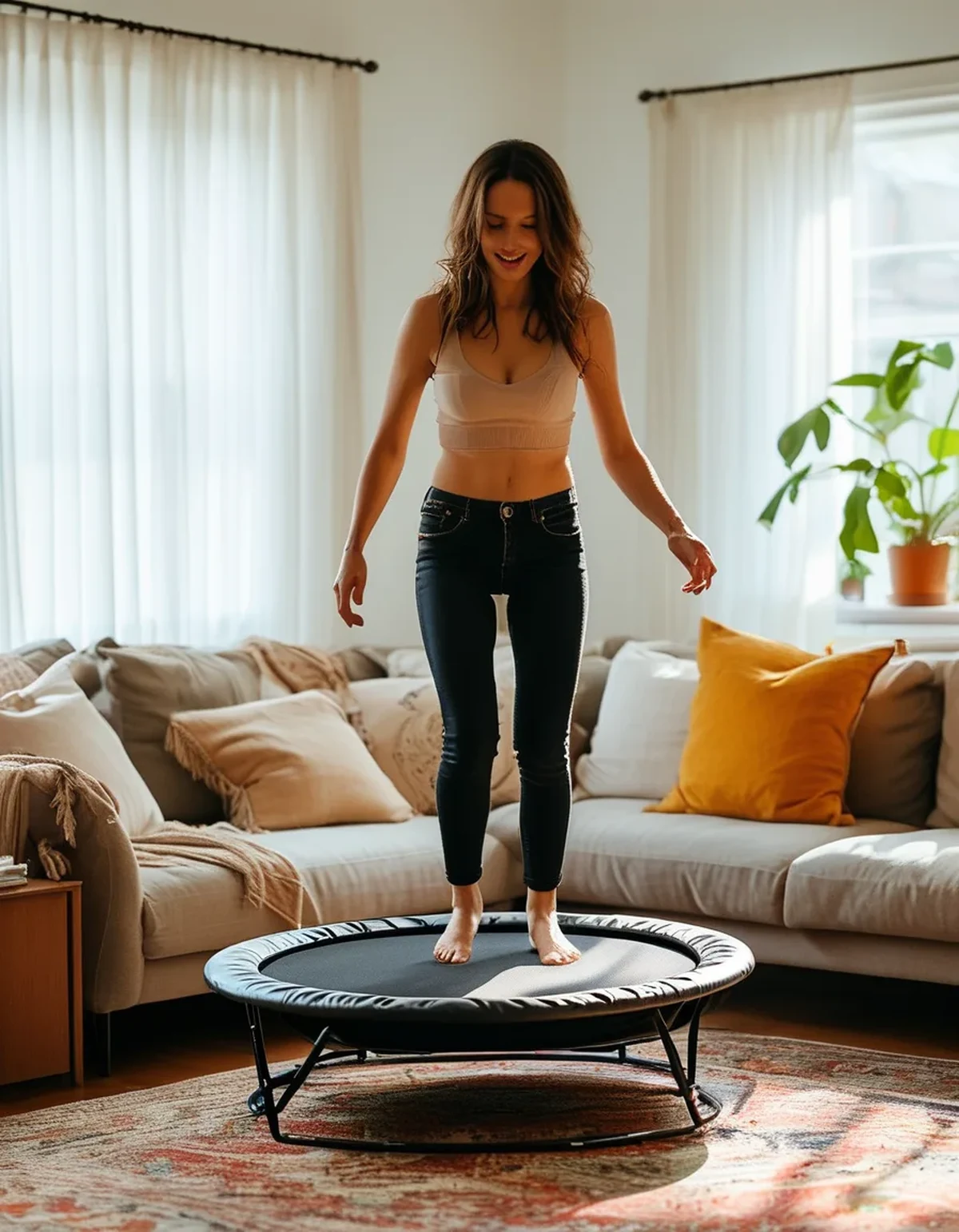
1. You sink deeper, and contact time doubles
The most immediate change, and the one everything else follows from.
Deeper sink means longer ground contact. On a fresh mat, contact is brief and the return is fast. On a soft mat you sit into it and the return is slow.
Longer contact reduces the elastic return. The mat is absorbing energy rather than giving it back, so you have to produce more of the work yourself.
The rhythm slows without you deciding to. Bounce frequency drops, and a slower bounce is a lower-intensity bounce.
It feels like effort but it is not intensity. You work harder to achieve less height, which is the specific reason people conclude they have lost fitness.
2. Your heart rate stops climbing the way it used to
The cardio effect quietly declines.
Bounce frequency drives heart rate. A fresh mat allows a faster cadence, and cadence is the main determinant of cardiovascular demand in rebounding.
Energy return matters. With a responsive mat you can maintain a higher cadence for longer because the mat is doing part of the work.
The session becomes strength-flavoured rather than cardio-flavoured. More muscular effort per bounce, fewer bounces per minute, lower aerobic demand overall.
Check it objectively. If your heart rate at the same perceived effort has dropped 10 or more beats compared with a few months ago, look at the mat before looking at yourself.
3. Your ankles start working overtime
This is where soft mats begin costing rather than just underdelivering.
A soft, uneven surface increases ankle instability. The foot lands on a surface that gives unpredictably, and the stabilisers compensate continuously.
Uneven bungee wear makes it asymmetric. Bungees rarely stretch evenly, so one side of the mat sinks more than the other, and your ankles absorb that difference.
Fatigue shows up in odd places. Ankle and lower-leg tiredness disproportionate to the session is a classic sign of a worn mat.
It matters more as you tire. Late in a session, when control declines, an unstable surface is exactly when awkward landings happen.
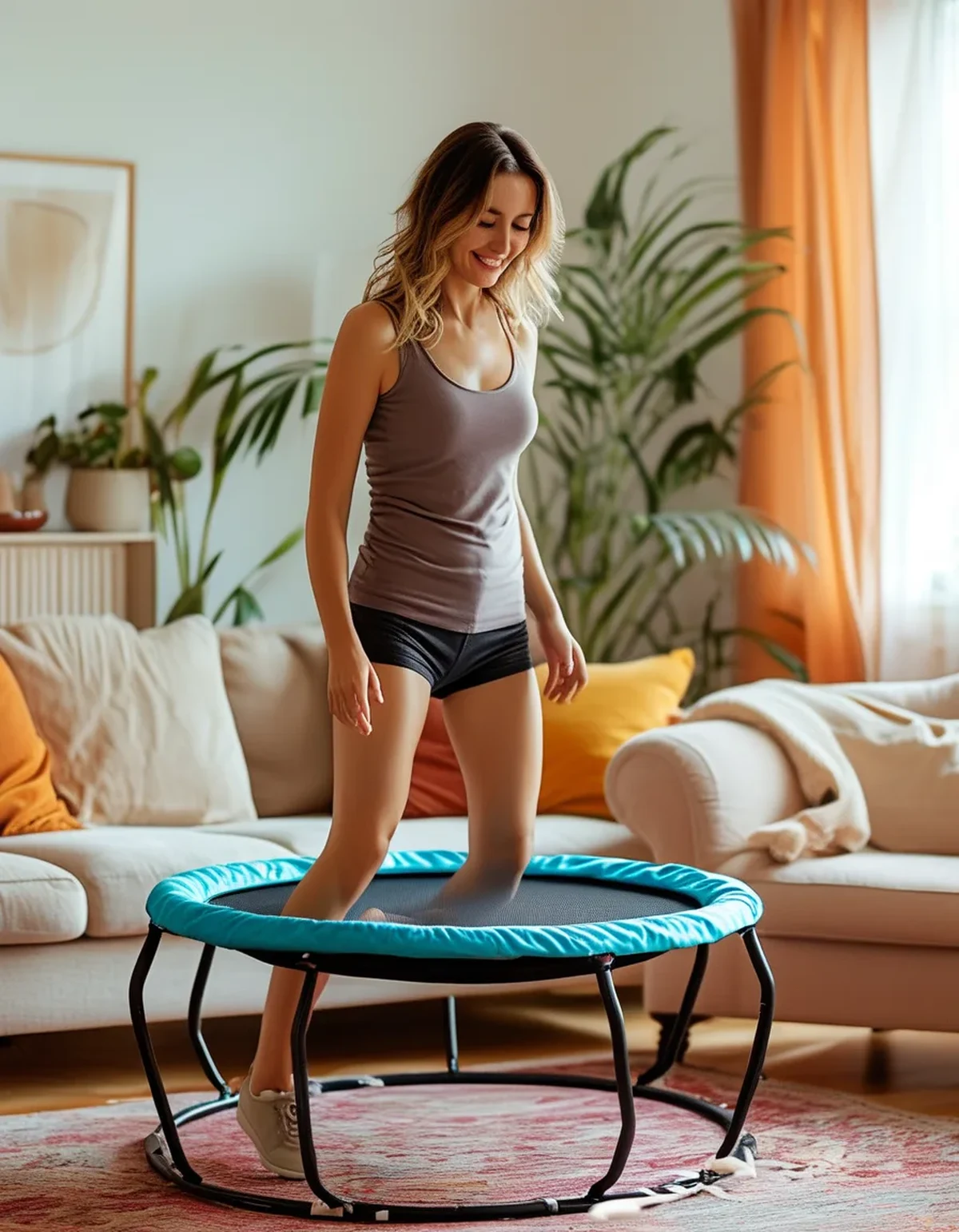
4. Your knees notice before anything else does
Rebounding’s main selling point is low impact, and a worn mat erodes it.
Impact absorption declines as elasticity is lost. A stretched bungee has less capacity to decelerate you smoothly.
Deeper sink means greater knee flexion under load. The joint works through a larger range on every single bounce.
Frame contact is the warning sign. If you can feel the frame at the bottom of a bounce, the mat is well past replacement and the impact protection is essentially gone.
This is the point to stop rather than push through. Knee discomfort during rebounding usually indicates equipment rather than technique.
This is general information, not medical advice — persistent knee pain deserves proper assessment.
5 and 6. The sound changes, and your balance work stops making sense
5. The noise changes, and it is a useful signal
Your rebounder tells you its condition if you listen.
A fresh mat is quiet and consistent. Even tension produces an even sound.
Worn bungees produce a duller, lower thud. Less elastic snap, more absorption.
Creaking or clicking indicates frame or attachment wear, which is a different and more urgent problem than mat softening.
Uneven sound between sides means uneven wear. Rotate the unit’s position and check the bungees individually.
Noise is the cheapest diagnostic you have and it costs nothing to pay attention to.
6. Your balance work gets harder for the wrong reasons
Single-leg and dynamic work suffers first.
Balance drills need a predictable surface. An unevenly worn mat makes them unpredictable rather than challenging.
The difficulty is instability, not control. You are not training balance better; you are training on a surface that gives inconsistently.
Progressions stop making sense. If the surface changes month to month, you cannot tell whether a harder drill reflects progress or a softer mat.
Test it simply. Stand on one leg in the centre. On a good mat this is stable and controllable. On a worn one it wobbles unpredictably.
7. Replacing the bungees restores almost all of it
The good news is that this is a cheap fix, not a new rebounder.
Bungee sets are inexpensive relative to the unit and usually take under an hour to swap.
Replace the whole set, never individual cords. Mixing new and old guarantees uneven tension, which is the problem you are trying to solve.
Typical intervals: 12 to 18 months for bungee systems with regular use, around 2 years for springs. Heavier users and daily use shorten both.
Rotate the mat position periodically. Most people mount and dismount from the same side, wearing that section faster.
Check monthly with the sink test. Stand in the centre and note the depth. A change of more than a few centimetres from new indicates replacement time.
Autumn note: as outdoor exercise winds down and rebounders come back into daily use, this is exactly the season to check tension before rebuilding a routine around it.
FAQ: Rebounder Maintenance Questions, Answered
How do I know if my bungees need replacing?
Sink depth has increased noticeably, the bounce feels dull, or you can feel the frame at the bottom of a bounce. Any of those means replace.
Are bungees better than springs?
Bungees are quieter and softer; springs are more durable and give a firmer, more responsive bounce. Both are valid, and both wear out.
Can I replace just the stretched ones?
No. Mixed tension creates an uneven surface, which is the underlying problem. Replace the full set.
How often should I check?
A monthly sink test takes ten seconds and catches gradual change you would otherwise not notice.
Does user weight affect the interval?
Yes, considerably. Heavier use and heavier users both shorten the life of a bungee set.
Is a worn rebounder dangerous?
More uncomfortable and less effective than dangerous, but the loss of impact absorption and increased instability do raise the risk of an awkward landing. Replace rather than push on.
TL;DR:
- Rebounder mats soften with use, and every effect people blame on their own fitness follows from that.
- Softer mat means deeper sink, longer contact, lower cadence and less cardio demand.
- Ankles and knees pay the cost as impact absorption and surface stability decline.
- Replace the whole bungee set every 12 to 18 months, springs around two years — never individual cords.
- Do a monthly sink test and listen to the sound; both are free diagnostics.
Stand in the middle of your rebounder and note how deep you sink. If it is noticeably more than when it was new, that is your whole explanation.
Keep Reading
This article is for general informational and styling purposes only. Fit, sizing, and product availability may vary.