7 Mini Trampoline Mistakes That Make Your Rebounder Workouts Less Effective
Quick Answer: Most rebounder workouts underdeliver because of a handful of fixable habits — bouncing too high, ignoring form, or using a cheap unbalanced unit — not because the equipment itself doesn’t work.
You bought a rebounder expecting a fun, joint-friendly cardio option, and three weeks in it’s mostly gathering dust in the corner. Before you write it off, check for these.
Mistake 1: Bouncing Too High, Too Soon
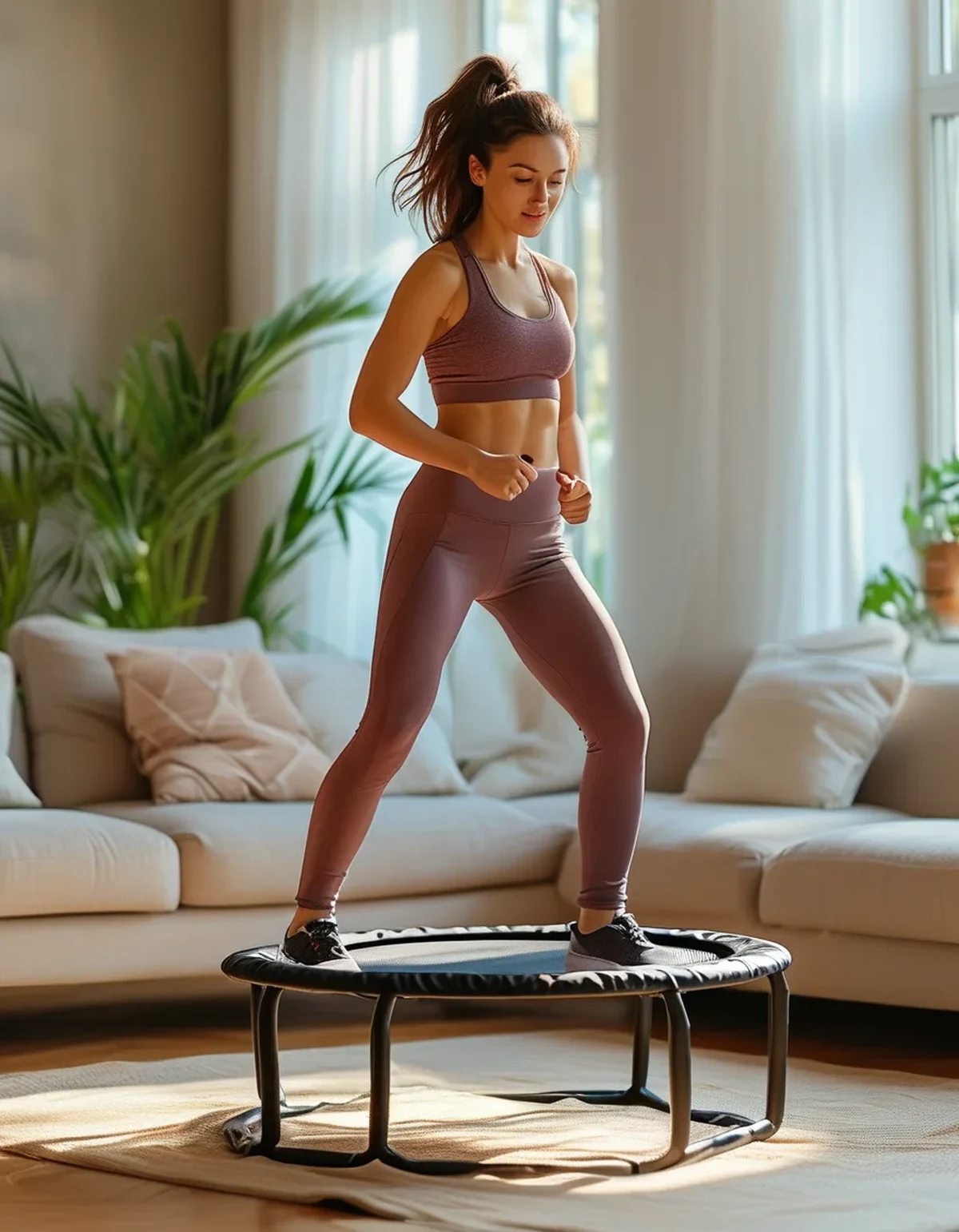
New users often try to get maximum air, which increases landing impact and makes control harder, not easier. Keep your feet low, close to the mat for the first few weeks — a controlled 2-3 inch bounce builds the stabilizer strength that makes higher bouncing safe later.
Mistake 2: Landing Flat-Footed
Landing with locked knees and flat feet sends shock straight up your joints instead of absorbing it. Bend your knees slightly on landing and let your calves and ankles help cushion each bounce — this is what makes rebounding lower-impact than running in the first place.
Mistake 3: Ignoring Posture
Slouched shoulders and a forward head position while bouncing strain your neck and reduce your core engagement. Keep your chest lifted and eyes forward, engaging your abs lightly throughout — this alone makes sessions feel noticeably less tiring on your neck.

Mistake 4: Skipping the Warm-Up
Jumping straight into a fast cardio bounce without 2-3 minutes of gentle bouncing first increases ankle and knee strain. A short warm-up lets your stabilizing muscles wake up before higher-intensity intervals.
Mistake 5: Using a Budget, Unbalanced Unit
Cheap rebounders with weak springs or an uneven mat make it harder to land safely and consistently, which undermines form no matter how careful you are. If yours squeaks or feels wobbly under normal use, it’s worth inspecting the spring tension and leg stability before doing more high-intensity work on it.
Mistakes 6 & 7: Same Routine and Overestimating Lymphatic Claims
Mistake 6: Doing the Same Routine Every Time
Sticking to one basic bounce pattern plateaus both cardio benefit and coordination gains. Rotate between basic bounce, jog-in-place, and side-to-side patterns across a session to keep different stabilizer muscles engaged.
Mistake 7: Overestimating the Lymphatic Claims
Rebounding is often marketed as a powerful lymphatic-drainage tool, but the evidence for dramatic lymphatic effects is thin — treat it as a solid low-impact cardio and balance workout first, and any circulation benefit as a bonus, not the main reason to do it.
FAQ: Rebounder Mistakes, Answered
How long should a beginner rebounder session be?
Start with 10-15 minutes, building toward 20-30 as your ankle and calf stability improve.
Is rebounding safe for people with joint issues?
It’s generally lower-impact than running, but anyone with existing joint or balance concerns should check with a doctor before starting.
Why does my rebounder squeak?
Usually loose spring hooks or a mat rubbing the frame — tightening the leg screws and checking spring seating resolves most squeaks.
TL;DR:
- Keep bounces low and controlled before chasing height
- Bend your knees on landing to actually get the low-impact benefit
- Fix posture — chest up, eyes forward, light core engagement
- Warm up for a few minutes before intense intervals
- Rotate bounce patterns and don’t oversell the lymphatic claims to yourself
This is general fitness information, not medical advice.
Keep Reading
This article is for general informational and styling purposes only. Fit, sizing, and product availability may vary.