7 Rebounder Workout Habits That Quietly Strain Your Knees Without Feeling Like Much at the Time
Quick Answer: Rebounder workouts are generally low-impact, but habits like locking the knees on landing, bouncing with poor alignment, using worn-out springs or an unstable mat, and progressing intensity too quickly can quietly build up knee strain over repeated sessions, even though each individual bounce feels soft and controlled.
The low-impact reputation is real, but it depends on landing mechanics that a few common habits can quietly undermine.
Habit 1: Locking the Knees Fully at the Top of Each Bounce
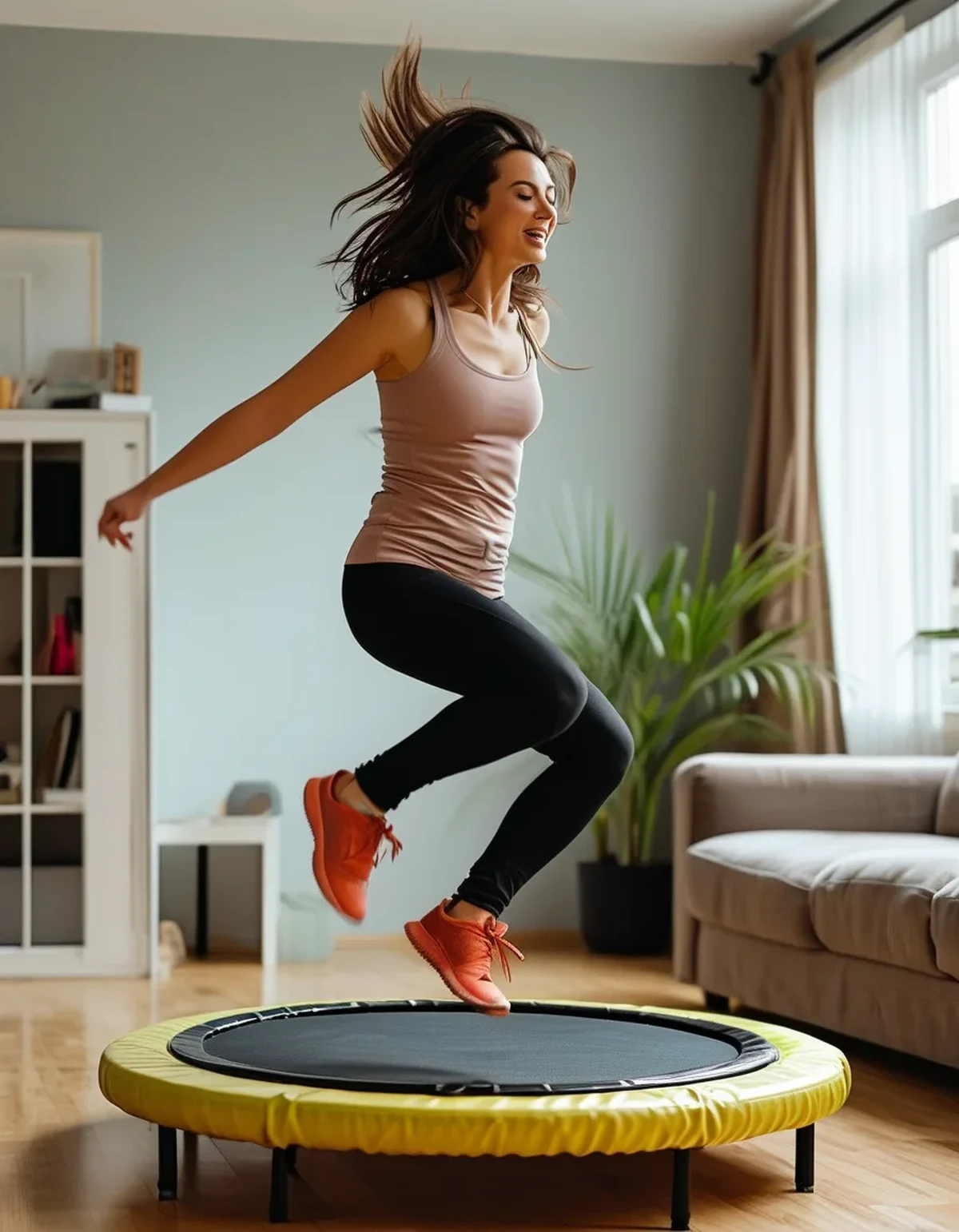
Landing and rebounding with fully locked knees transfers more force directly into the joint rather than absorbing it through the surrounding muscles, which defeats much of the rebounder’s natural shock-absorption advantage.
Habit 2: Letting the Knees Cave Inward on Landing
Knee valgus — knees drifting inward toward each other during landing — places uneven lateral stress on the joint that a soft mat surface doesn’t correct on its own, and it’s easy to miss without deliberately checking alignment.
Habit 3: Skipping a Warm-Up Because the Workout Feels Gentle
Assuming rebounding is too low-impact to need a warm-up skips the joint lubrication and muscle activation that actually protects the knees, especially during the first few higher-intensity minutes of a session.
Habit 4: Using a Worn-Out or Overly Soft Rebounder
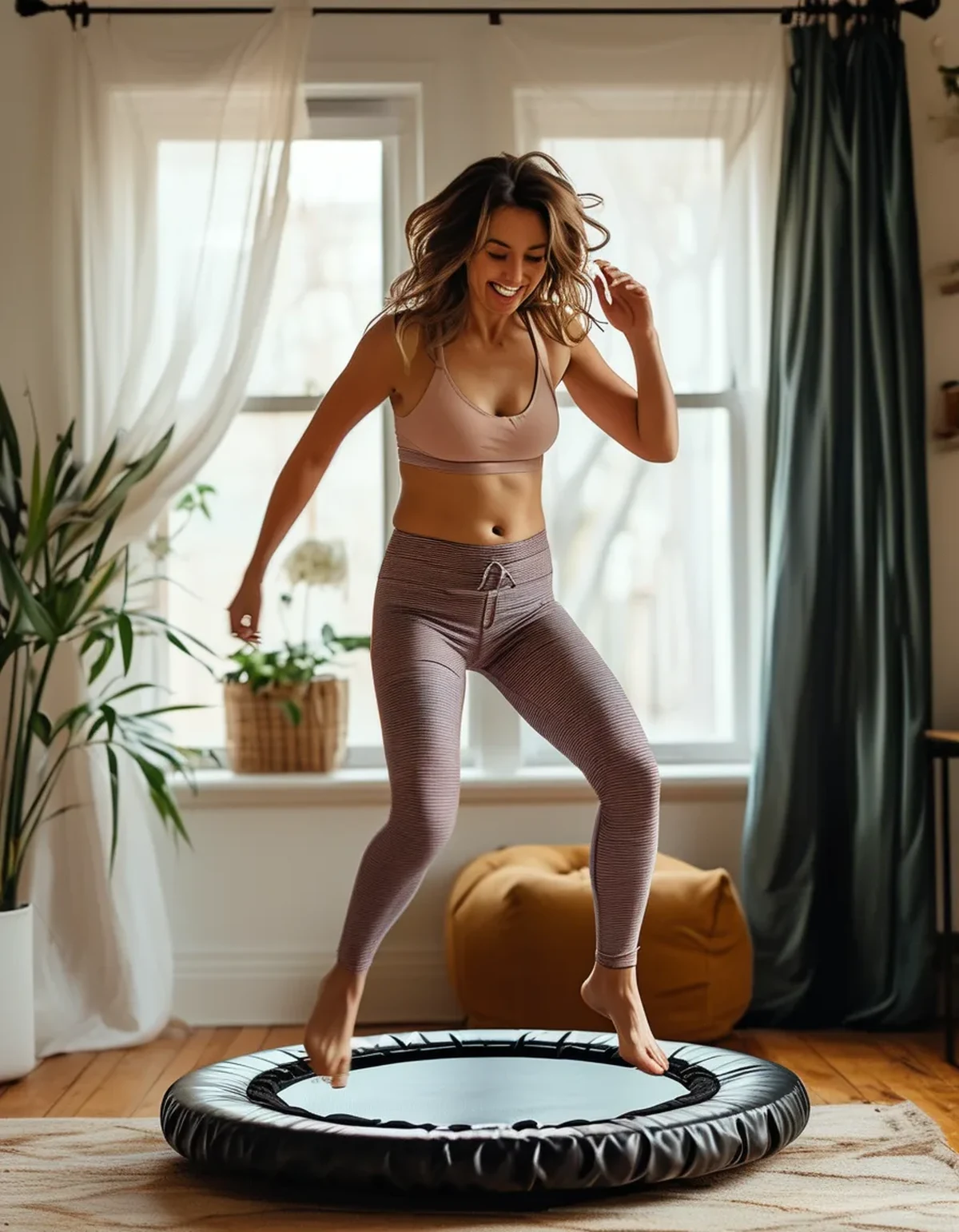
Springs or a mat that have lost tension absorb rebound force less predictably, which can subtly change landing mechanics session after session in ways that are hard to notice compared to a properly tensioned unit.
Habit 5: Increasing Bounce Height Before Improving Landing Control
Progressing to higher, more athletic bounces before landing mechanics are solid amplifies whatever alignment issues already exist, rather than building on a stable foundation.
Habits 6 and 7: The Two That Show Up Over Weeks, Not One Session
Habit 6: Doing the Same Bounce Pattern Every Session
Repeating identical movement patterns daily concentrates stress on the exact same knee structures repeatedly, rather than distributing load across varied movement patterns that a mixed routine would provide.
Habit 7: Ignoring Mild, Recurring Knee Awareness After Sessions
Dismissing a subtle, recurring ache as simply part of a new workout routine, rather than adjusting form or reducing intensity, often lets a small mechanical issue accumulate into a more noticeable one.
FAQ: Rebounder Workouts and Knee Safety, Answered
Is rebounding still considered safer for knees than running overall?
Generally yes, since the mat absorbs a meaningful portion of impact force, but that advantage depends on reasonable landing mechanics rather than being automatic regardless of form.
How can I check my own knee alignment without a coach watching?
Recording a short video of your bounce from the front is a simple way to spot inward knee drift or locked-knee landings that are hard to feel in the moment.
When should knee discomfort from rebounding be checked by a professional?
Sharp, localized pain, swelling, or discomfort that persists beyond a day or two after sessions is worth having evaluated rather than continuing to train through it.
TL;DR:
- Locked knees and inward knee drift both undermine the rebounder’s natural shock absorption
- Skipping a warm-up and using worn-out equipment quietly change landing mechanics
- Progressing bounce height before landing control is solid amplifies existing issues
- Repetitive identical patterns and ignored mild soreness let small problems build up over weeks
Keep Reading
This article is for general informational and styling purposes only. Fit, sizing, and product availability may vary.