7 Reasons Your Rebounder Feels Different After You Move It
Quick Answer: A rebounder does not work in isolation - it works as a system with the floor beneath it. Move it from carpet to hard floor, from a suspended timber floor to a concrete slab, or into a corner instead of the middle of a room, and the amount of energy the floor absorbs and returns changes substantially. Add temperature, humidity, leg contact, and how level the surface is, and the same equipment genuinely behaves differently.
Seven specific causes, each with a fix.
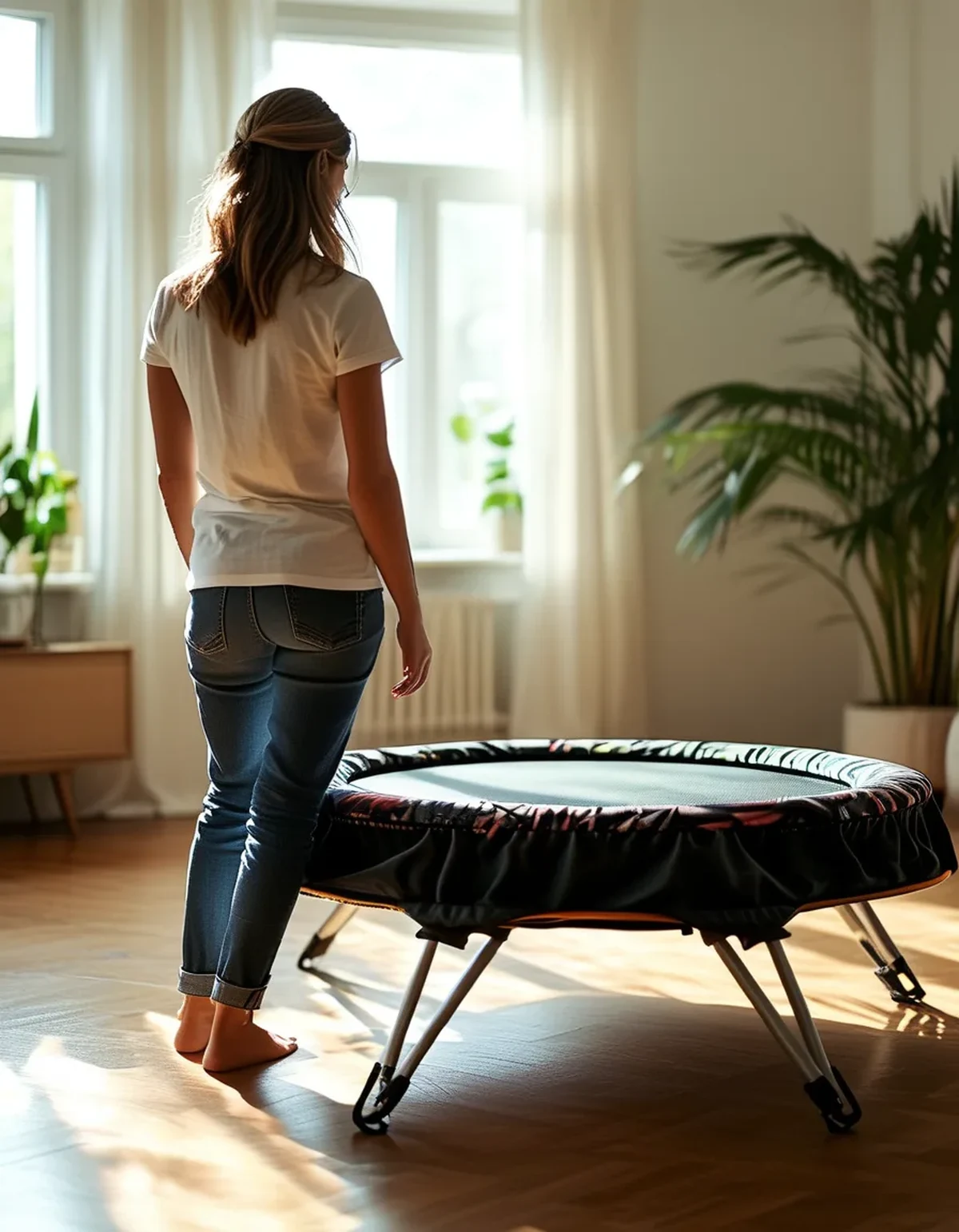
1 and 2: The floor changed, and your legs may not be sitting level on it
1. The floor is now absorbing or returning different energy
The largest single factor and the one people never consider.
Your bounce energy does not stop at the mat. It travels through the frame, into the legs, and into the floor. A floor that flexes absorbs some of that energy and returns it out of phase with your bounce - which is what makes a rebounder feel bouncier, mushier, or subtly off-rhythm.
A suspended timber floor flexes noticeably. Joists deflect and spring back, adding a secondary movement that combines with the trampoline’s own. Many people describe this as a deeper, livelier bounce.
A concrete slab returns almost nothing. All the springiness comes from the mat and springs alone, which reads as firmer and more controlled - and often as harder work, because you get less help.
Thick carpet absorbs and dampens. It also lets the legs sink unevenly, which is a separate problem covered below.
The fix: you cannot change the floor, but you can choose the stiffest available spot - near a load-bearing wall rather than mid-span - if you want consistency, and use a firm mat under the frame to standardise the interface. Consistency of location matters more than which location.
2. The legs are not all making equal contact
Common, invisible, and it changes everything about the bounce.
Rebounder legs need to be equally loaded. If one leg is on a rug edge, a floorboard seam, or an uneven tile, the frame twists slightly under load and the mat tension becomes asymmetric.
You feel this as being pushed toward one side, or as a bounce that is subtly harder to control than it was. Many people interpret it as their own balance getting worse.
Carpet makes it worse. Legs sink to different depths depending on the pile and what is underneath. A rebounder on carpet is almost never sitting level, even when it appears to be.
The fix: press down on the frame at each leg in turn and check for any rocking. Put a firm board or a dense mat underneath so all legs sit on one continuous, rigid surface. This is the single most effective fix on this list, and it takes about a minute.
3. Temperature has changed the springs and the mat
Genuinely significant, and it explains the seasonal complaints.
Steel springs are slightly stiffer when cold. Not dramatically, but enough to be noticeable across a set - and bungee cord systems change far more with temperature than steel does.
The mat fabric stiffens in cold too. Woven mat material is less compliant at low temperatures, which reduces how much it gives under load.
So a rebounder moved from a warm living room to a cool garage or spare room feels firmer and less forgiving, particularly in the first few minutes.
And this is a seasonal effect as much as a location one. The same rebounder in the same room feels different in October than it did in July - which is exactly the time of year people start noticing and blaming the equipment.
The fix: bounce gently for three to five minutes before working properly. Both the springs and your own tissues need it, and a cold-start session on a cold rebounder is where most rebounder-related joint complaints originate. This is a warm-up for the equipment as well as for you.
4. The room’s acoustics changed, and you are hearing it differently
Not a physical change to the bounce, and it genuinely alters how you move.
Sound gives you feedback about your landings. A quiet, controlled landing sounds different from a heavy one, and you adjust unconsciously based on that feedback.
A small room with hard surfaces is far louder and more reverberant. The same bounce sounds heavier, so people unconsciously reduce their effort to make less noise.
A carpeted room absorbs sound, so the same bounce sounds lighter and people push harder without realising.
And if you have moved somewhere with neighbours below or beside you, that awareness changes your movement directly - shorter bounces, more tension, less relaxation into the mat. A tense bounce is a completely different exercise from a relaxed one.
The fix: if noise is a genuine constraint, address it properly - a dense mat under the frame reduces transmission substantially - rather than by unconsciously holding back. Holding back changes your mechanics, and it is worth solving the underlying concern instead.
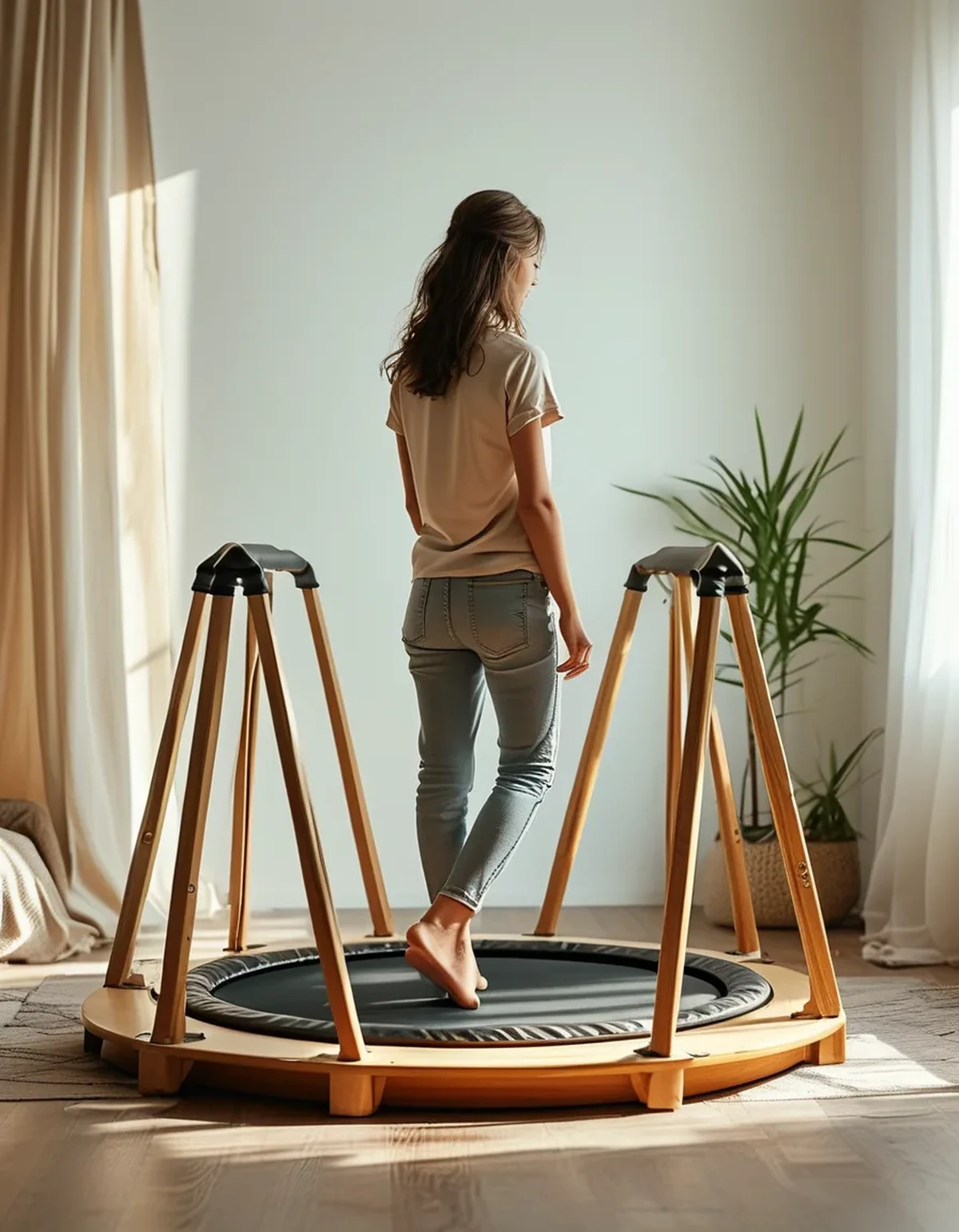
5. Your visual references are completely different
Balance is more visual than most people realise, and rebounding is a balance task.
You balance against visual reference points - walls, a doorway, a window, the horizon of the room. Moving to a new room replaces every one of them.
Facing a blank wall is harder than facing a window. With no depth cues, your visual system has less information to stabilise against, and the bounce feels wobblier.
A mirror changes things too, and not always for the better - some people stabilise better with visual feedback and some are distracted by it.
Ceiling height matters more than it sounds. A low ceiling produces an unconscious tendency to reduce bounce height, even when there is ample clearance.
The fix: face the direction with the most depth information - a window or the long axis of the room - and give yourself a week in the new position. Visual recalibration happens quickly, and most of this resolves on its own once you stop attributing it to the equipment.
6. The mat and springs have aged since you last paid attention
Moving is simply when you notice something that was happening gradually.
Springs lose tension over time and with use. The change is slow enough to be invisible day to day, and obvious after a break or a move.
Bungee systems degrade faster than steel springs and are more sensitive to UV and temperature cycling. A rebounder stored in a conservatory or a garage ages considerably faster.
Mats stretch. Woven fabric under repeated tension gradually elongates, which lowers the mat’s resting height and changes the bounce depth.
And springs wear unevenly depending on where you habitually land. If you always bounce slightly off-centre, those springs age faster - producing a mat that is subtly tilted in its response.
The fix: inspect during the move, since everything is accessible. Check for rust, deformed spring hooks, frayed bungees, and any stitching damage on the mat, and check for elongated or misshapen springs. Replace springs as a full set, not individually - a new spring among old ones creates exactly the asymmetry you are trying to fix.
And check the safety-critical items while you are there: spring cover in place, no exposed hooks, frame welds intact, and leg fixings tight. A move is the best inspection opportunity you get all year.
7. You are training at a different time of day
Frequently the real answer, and completely unrelated to the rebounder.
A room change often comes with a schedule change - moving equipment out of a shared space usually means training at a different time.
Your body is genuinely different across the day. Muscle temperature, joint stiffness, and coordination are all lower in the morning, and balance and reaction time are typically better in the afternoon and early evening.
Spinal discs are more hydrated in the morning, which makes some people feel stiffer and taller early on, and it changes how impact feels.
And fatigue state differs. A session after work follows a day of standing or sitting, which is not the same starting point as a session before it.
The fix: compare like with like before concluding anything about the equipment. Do one session at your old time in the new room, and one at the new time. If the difference tracks the time rather than the room, the rebounder was never the variable.
And a general principle worth ending on: change one variable at a time when something feels wrong. Most people move the rebounder, change the time, change the flooring, and start a new routine simultaneously - and then have no way to know which of the four caused the change.
This is general fitness information, not medical advice. If you experience joint pain, dizziness, or pelvic floor symptoms while rebounding, stop and get it assessed - and if you have balance concerns, use a rebounder with a stability bar and place it where there is clear space on all sides.
FAQ: Rebounder Setup, Answered
Does the floor really change how a rebounder feels?
Substantially. A suspended timber floor flexes and returns energy out of phase with your bounce; a concrete slab returns almost nothing. The same rebounder genuinely behaves differently on each.
Should I put my rebounder on carpet?
It is workable but not ideal - the legs sink to different depths and the frame ends up subtly twisted. A firm board or dense mat under the whole frame gives all the legs one continuous rigid surface.
Why does it feel firmer in a cold room?
Steel springs stiffen slightly when cold, bungee systems change more, and the mat fabric is less compliant. Three to five minutes of gentle bouncing warms both the equipment and you.
How do I know if my springs need replacing?
Look for rust, deformed or elongated springs, damaged hooks, or frayed bungees. Replace as a complete set rather than individually - one new spring among old ones creates asymmetric tension.
Why does my balance feel worse in the new room?
You balance against visual reference points, and a new room replaces all of them. Face the direction with the most depth information and give it about a week - visual recalibration is fast.
Is it the rebounder or is it me?
Often the schedule. A room move usually comes with a time-of-day change, and muscle temperature, joint stiffness, and coordination all vary across the day. Test one session at your old time before concluding anything.
What is the single most useful fix?
Make sure all the legs sit on one continuous rigid surface with no rocking. It takes a minute, and an unevenly loaded frame changes mat tension and bounce direction more than anything else on this list.
TL;DR:
- A rebounder works as a system with the floor - timber floors flex and return energy, concrete returns almost none, carpet absorbs and destabilises.
- Uneven leg contact twists the frame and skews mat tension - the highest-value fix, and it takes a minute.
- Cold stiffens springs and mat fabric, so it feels firmer in October than it did in July. Warm up the equipment as well as yourself.
- Room acoustics change how hard you bounce without you deciding to - especially with neighbours nearby.
- New visual references disrupt balance; face the direction with the most depth and give it a week.
- A move is your best chance to inspect springs, bungees, mat stitching, and welds - replace springs as a full set.
- A room change usually comes with a time change, and time of day affects stiffness, coordination, and balance more than people expect.
Change one variable at a time - most people change four at once and then cannot tell which one did it.
This is general information, not medical advice.
Keep Reading
This article is for general informational and styling purposes only. Fit, sizing, and product availability may vary.