6 Rebounder Mistakes New Owners Make in the First Month
Quick Answer: The most common early rebounder mistakes are jumping too high too soon, landing flat-footed instead of through the whole foot, ignoring the mat’s actual bounce properties, and skipping a proper warm-up — all of which are easy to fix once you know to look for them.
You bought the rebounder expecting an easy, joint-friendly cardio win, and a month in you’re either bored, mildly sore in a weird spot, or barely using it — these six mistakes are usually why.
1. Bouncing too high, too soon
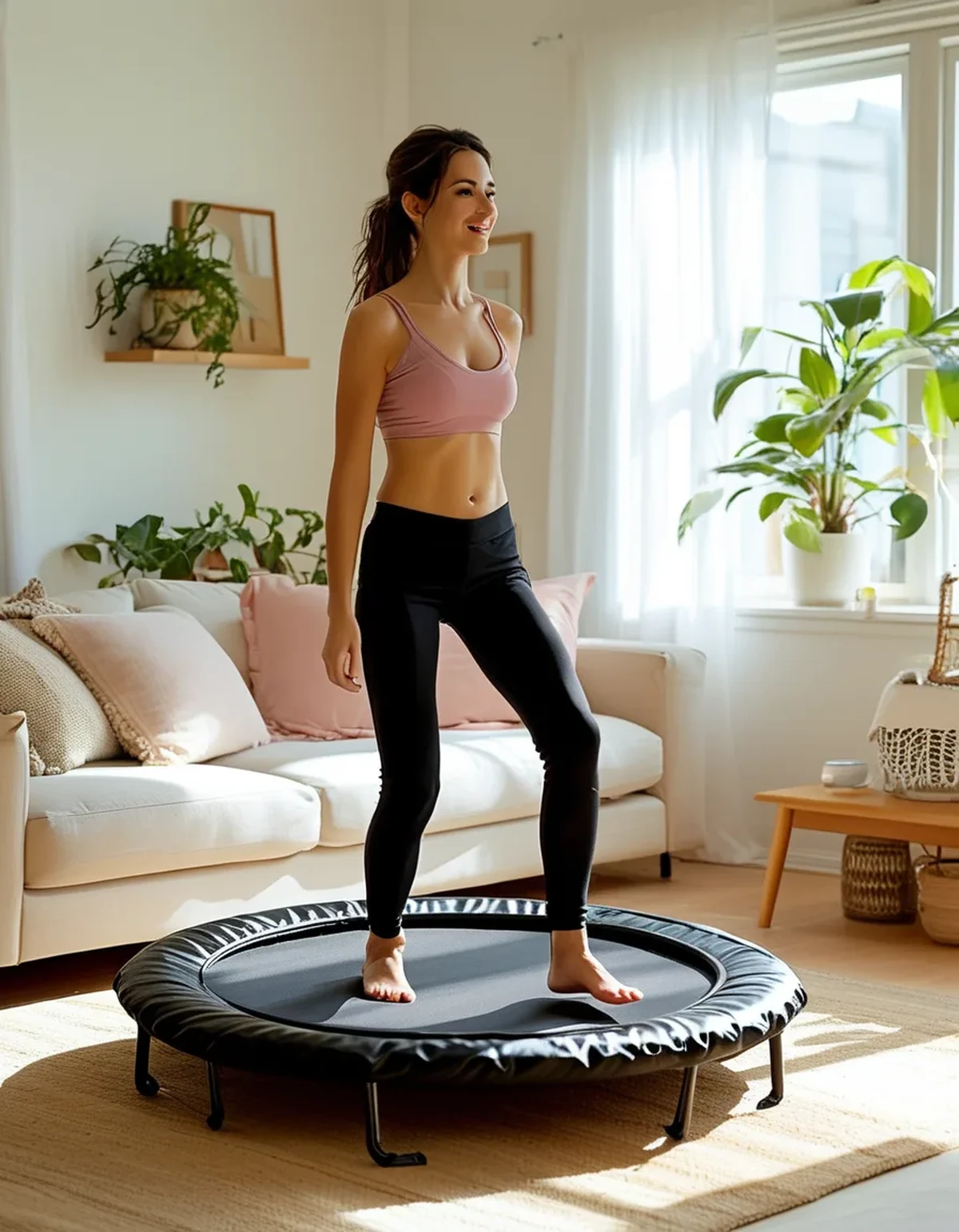
New owners often chase height because it feels like more “exercise,” but higher bounces reduce control and increase landing impact exactly when your stabilizing muscles are least trained for it. Start with small, controlled bounces where your feet barely leave the mat before progressing height.
2. Landing flat-footed instead of rolling through the foot
A flat, heel-first landing sends more shock straight up through the ankles and knees than a landing that rolls from ball of foot through to a soft heel touch. This single form fix is often what separates people who find rebounding genuinely joint-friendly from those who don’t.
3. Skipping any warm-up at all
Because rebounding feels low-impact, many new owners jump straight in cold — but the ankles and calves specifically benefit from a short warm-up (ankle circles, calf raises) since they’re doing constant micro-stabilization work the whole session that a cold joint isn’t ready for.

4. Using the wrong footwear, or none at all
Bare feet or thin socks work for many people and actually improve proprioceptive feedback, but shoes with thick, unstable soles change how your ankle stabilizes on the unstable mat surface — if you’re going to wear shoes, a flatter, more minimal sole tends to work better than a thick running shoe.
5. Ignoring the mat’s specific bounce properties
Every rebounder model has a different spring or bungee-cord tension and mat give, and using a routine designed for a different, bouncier model on a firmer one (or vice versa) throws off your landing timing. Spend the first sessions just getting a feel for your specific unit before following along with a generic video routine.
6. Doing the same routine every session, on the wrong surface
Repeating one basic bounce pattern daily plateaus quickly — varying direction (side to side, twists) and adding light arm movement both increases the workout’s actual demand and reduces repetitive strain on the same stabilizing muscles every session. Also check placement: a rebounder on carpet or an uneven floor changes its stability characteristics in ways that aren’t obvious but affect landing safety — a firm, flat, even surface is worth prioritizing.
FAQ: Rebounder Beginner Mistakes, Answered
How long before rebounding form starts to feel natural?
Most people find their landing mechanics feel noticeably more automatic within 2-3 weeks of consistent, controlled practice.
Is soreness in the calves and ankles normal at first?
Some soreness is normal as stabilizing muscles adapt to a new surface; sharp joint pain is not and warrants checking form or footwear.
Do more expensive rebounders actually fix beginner mistakes?
A quality, well-tensioned rebounder helps with predictable bounce feedback, but it doesn’t replace correcting the landing and warm-up habits above.
TL;DR:
- Start with small, controlled bounces rather than chasing height early on
- Roll through the foot on landing instead of coming down flat-footed
- Warm up ankles and calves briefly before every session
- Vary movement patterns regularly to avoid plateau and repetitive strain
Keep Reading
This article is for general informational and styling purposes only. Fit, sizing, and product availability may vary.